Keystone Vote Fails in Senate

Ranking member Senator Maria Cantwell (D-WA) and committee chairman Senator Lisa Murkowski (R-AK) listen during a session of the Senate Energy and Natural Resources Committee on Capitol Hill January 8, 2015 in Washington, DC. The committee met for a markup of legislation to arrive the Keystone XL pipeline project. (BRENDAN SMIALOWSKI/AFP/Getty Images)

January 26, 2015 A key vote to advance legislation green-lighting the Keystone XL oil sands pipeline failed 53-39 in the Senate on Monday.

The vote aimed at cutting off debate on legislation to approve the controversial project fell short of 60 votes after Democrats, angry at Republicans for blocking debate on a slate of Democratic amendments last week, blocked the measure.

“Last Thursday night the majority decided that they would not allow for debate,” Democratic Sen. Ed Markey said on the floor ahead of the vote, echoing a complaint that a number of Democrats expressed on Monday after the Senate reconvened to debate the bill.

Senate Republicans have instigated a “gag-a-thon,” said Sen. Barbara Boxer, D-Calif.

Democratic Sen. Tom Carper of Delaware said he voted against ending debate because of the “failure of the majority to follow through on the open amendment process,” taking aim at Senate Majority Leader Mitch McConnell.

Read more at the National Journal

RNC Turns Deaf Ear To Questions About Trip Funded by Hate Group

Gage Skidmore [CC BY-SA 3.0], via Wikimedia Commons
Republican National Committee Chairman Reince Priebus photo attribution: Gage Skidmore [CC BY-SA 3.0], via Wikimedia Commons

Last week, the Southern Poverty Law Center (SPLC) faxed and sent letters to every member of the Republican National Committee (RNC) regarding an upcoming trip to Jerusalem being organized by RNC Chair Reince Priebus.

The letters expressed concern about the organization paying for the trip, the American Family Association (AFA), which the SPLC has listed as an anti-LGBT hate group since 2010.

In particular, the letters asked RNC members not to lend their good offices to an organization with a long track record of making anti-LGBT, anti-Muslim and other hateful statements. An email to Priebus’ director of communications about this matter was not responded to.

In early December, Time reported that 60 members, or about a third, of the RNC had decided to travel to Israel. But you wouldn’t know that from the calls we made. We left dozens of voicemails and sent many, many emails, none of which were replied to.

In Illinois, Indiana, Iowa, Oklahoma and Tennessee, communications directors were unaware of the trip and promised to speak with RNC members and get back to us. They did not. Other state communications directors, like those in Maryland and Louisiana, said they knew nothing of the trip and could not answer questions. In Idaho, a communications staffer told us she had no idea what we were talking about, but that she would have known about a trip if there was one.

Read more at the Southern Poverty Law Center

Well, well. It seems that the fascists have been planning a nice little putsch. Speak of strange bedfellows.

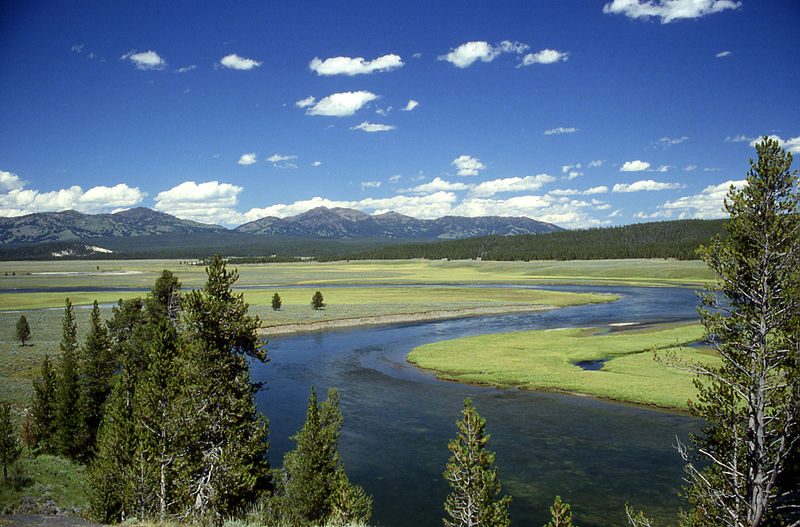
Second crude pipeline spill in Montana wreaks havoc on Yellowstone River

konigludwig's avatarWorld News Forum

 Second crude pipeline spill in Montana wreaks havoc on Yellowstone River
Second crude pipeline spill in Montana wreaks havoc on Yellowstone River

By Nate Schweber

Environmental damage from recent oil leak ranges from contaminated water supply to polluted farmland

GLENDIVE, Montana — When an oil pipeline burst in July 2011 and poured 63,000 gallons of crude into the Yellowstone River 200 miles upstream from Dena Hoff’s farm of wheat, beans and corn on the Great Plains in Glendive, she felt disgusted.

When it happened again Saturday, she felt terror. This pipeline breach was underneath the Yellowstone River, just a few feet from her sheep pasture. The new spill poured out some 50,000 gallons of crude oil. Leaders of this small riverside farming and ranching community in northeastern Montana warned residents not to drink their tap water, because benzene, a carcinogen, was found in the municipal water system. Oil slicked the river for dozens of miles, almost to the border with North…

View original post 136 more words

As Syria’s Revolution Sputters, a Chaotic Stalemate

 TORN BY WAR The view from a mosque in Homs, Syria, that has served as a rallying point for insurgents.  Credit Sergey Ponomarev for The New York Times
TORN BY WAR The view from a mosque in Homs, Syria, that has served as a rallying point for insurgents. Credit Sergey Ponomarev for The New York Times

By Anne Barnard in The New York Times

ANTAKYA, Turkey — It was a victory that President Bashar al-Assad’s opponents had dreamed of: Insurgents seized a key army base in northern Syria after more than a year of trying. But the mood in this Turkish border town, flooded with Syrians who have fled both government bombings and extremist insurgents, was more bitter than celebratory.

The assault this month was led by the Nusra Front, Al Qaeda’s arm in Syria, which claimed the spoils. By contrast, many of the first Syrians to rise up against Mr. Assad in 2011 — civilian demonstrators and army defectors alike — followed the battle from the sidelines here, unable to enter Syria under threat of death from the extremists of Nusra and its rival group, the Islamic State.

As Syria’s war heads toward its fourth year, the complex battleground is increasingly divided between the government and the extremists, leaving many Syrians feeling that the revolution on which they gambled their lives and livelihoods has failed.

Different insurgent groups battle one another, even as they fight against Mr. Assad’s forces and his allies, foreign Shiite militias. A chaotic stalemate reigns in a war that has killed more than 200,000 people and wounded one million.

In northern and eastern Syria, where Mr. Assad’s opponents won early victories and once dreamed of building self-government, the nationalist rebel groups calling themselves the Free Syrian Army are forced to operate under the extremists’ umbrellas, to go underground or to flee, according to Syrian insurgents, activists and two top commanders of the American-financed F.S.A. groups.

Read more at The New York Times

Why Merav Michaeli Is Upbeat About the Israeli Left

 Photograph via flickr
Photograph via flickr

Merav Michaeli, the Israeli journalist and women’s rights activist-turned-Knesset member for the Labor Party, is a sign of hope for a progressive future in Israel. Last Tuesday, she tried to convince an exclusive crowd of worried Jewish leftists gathered in an apartment on Manhattan’s Upper West Side that there was hope for the upcoming elections and for the future of a democratic Israel. The talk was sponsored by the progressive Zionist organization Ameinu, and also included journalists, professors, high-ranking members of the New Israel Fund and Encounter, along with representatives from Hillel, Habonim Dror, and others. What followed was a passionate, sometimes heated, and surprisingly optimistic discussion of the future of the Jewish State and the role American Jews can play.

*The first question asked was about the nationality bill, the controversial proposed law to officially declare Israel the “Nation-State of the Jewish People.” This question proved an easy one—since there is no Knesset, there will be no nationality bill. When there is a new Knesset, its makeup will likely be so different that it won’t even be proposed again.

*On the coming elections slated for March 17: Though the mood in the room suggested I was not alone in hearing virtually nothing but terrifying predictions of a rout by the right and another term for Netanyahu, if not a first term for the ultra-nationalist Jewish Home Party’s Naftali Bennett, she was hopeful. For the first time in a long time, she said, there was actually a good chance a center-left coalition headed by her Labor Party will take power, meaning Labor leader Isaac Herzog and not Bibi Netanyahu would be Prime Minister. “The feeling towards Netanyahu right now, there is so much grudge and hatred, people are sick of him. His approval ratings are very, very low,” she said.

To capitalize on this, Labor is busy forming a center-left bloc of parties that will include the recently-fired former justice minister Tzipi Livni and former defense secretary and chief of staff Shaul Mofaz to give Herzog an additional vote of confidence among the public. Though the political climate in Israel is notoriously quick to change, polls show that if the election were held today, this coalition would win the majority of votes. The goal, she said, is to create, “One address for people who want to restore a more democratic Israel, one that works towards narrowing gaps in society.”

Read more at The Jewish Daily Forward

Brave New Turkey

Gobierno de Chile [CC BY 3.0 cl (http://creativecommons.org/licenses/by/3.0/cl/deed.en)], via Wikimedia Commons
President Recep Tayyip Erdogan of Turkey Gobierno de Chile [CC BY 3.0 cl], via Wikimedia Commons

By Andrew Finkel in The New York Times

ISTANBUL — Freedom House, the democracy watchdog, earlier this year downgraded the Turkish press from being “partly free” to “not free.” Now it may have to create a new category: “not free at all.”

On Sunday, Dec. 14, Turkish police raided the headquarters of Zaman, the country’s most widely circulated daily, and a major television station, taking into custody at least 24 people, including the paper’s editor-in-chief and the station’s director. (The editor has since been released.) They were detained on suspicions of “establishing a terrorist group.” But the New York-based Committee to Protect Journalists said the raids smacked “of political vengeance.”

A decade ago Recep Tayyip Erdogan, then Turkey’s prime minister, was the most likely candidate to lead the Islamic world. He had managed to keep Turkey out of the 2003 Iraq War, was grooming it for membership in the European Union, and was getting on with economic reform. Ordinary Turks were feeling prosperous, proud and hopeful. So why is the Turkish government now going off the rails when it has been perfectly popular doing the right things?

Today Mr. Erdogan is the president, and his style is in-your-face confrontational. He is revered by enough people to get his party re-elected, but many others loathe him (remember the protests in Gezi Park?), and some of his eccentricities have made him a favorite of headline writers. Like a potentate of some Sacha Baron Cohen parody, he has had a presidential palace with over a thousand rooms built for himself. No one knows how much it cost: The government agency responsible for the construction says the sum is a state secret because its disclosure would damage the economy.

Read more at The New York Times

The Eric Garner case’s sickening outcome

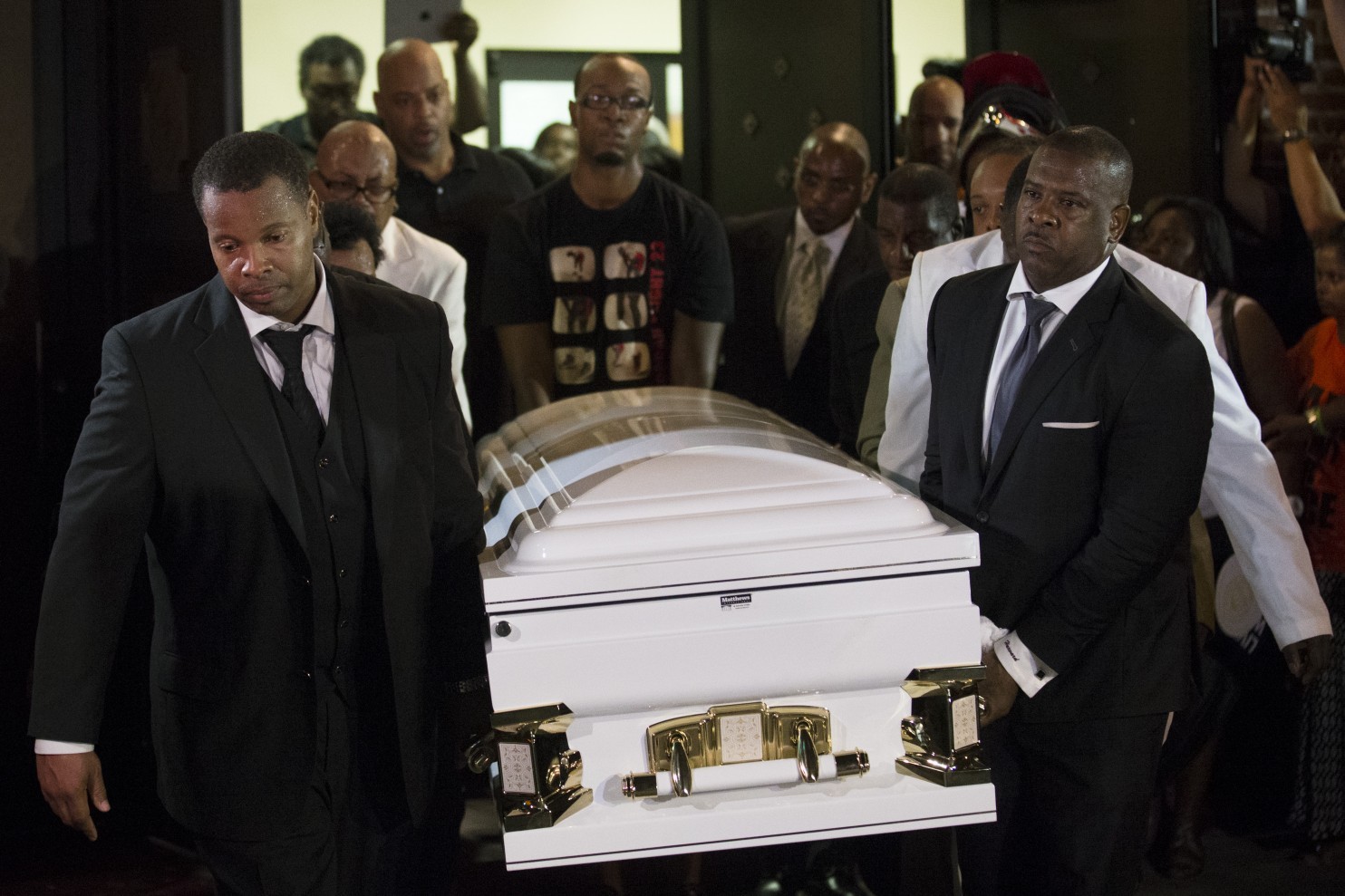
 Pallbearers carry the casket of Eric Garner at Bethel Baptist Church following his funeral service, Wednesday, July 23, 2014, in the Brooklyn borough of New York. (John Minchillo/AP)
Pallbearers carry the casket of Eric Garner at Bethel Baptist Church following his funeral service, Wednesday, July 23, 2014, in the Brooklyn borough of New York. (John Minchillo/AP)

Eugene Robinson in The Washington Post

I can’t breathe.

Those were Eric Garner’s last words, and today they apply to me. The decision by a Staten Island grand jury to not indict the police officer who killed him takes my breath away.

In the depressing reality series that should be called “No Country for Black Men,” this sick plot twist was shocking beyond belief. There should have been an indictment in the Ferguson case, in my view, but at least the events that led to Michael Brown’s killing were in dispute. Garner’s homicide was captured on video. We saw him being choked, heard him plead of his distress, watched as no attempt was made to revive him and his life slipped away.

This time, there were literally millions of eyewitnesses. Somebody tell me, just theoretically, how many does it take? Is there any number that would suffice? Or is this whole “equal justice before the law” thing just a cruel joke?

African American men are being taught a lesson about how this society values, or devalues, our lives. I’ve always said the notion that racism is a thing of the past was absurd — and that those who espoused the “post-racial” myth were either naive or disingenuous. Now, tragically, you see why.

Garner, 43, was an African American man. On July 17, he allegedly committed the heinous crime of selling individual cigarettes on the street. A group of New York City police officers approached and surrounded him. As seen in cellphone video footage recorded by an onlooker, Garner was puzzled that the officers seemed to be taking him into custody for such a piddling offense. He was a big man, but at no point did he strike out at the officers or show them disrespect.

Read more at The Washington Post

The Laws That Killed Eric Garner

From Ferguson to Staten Island, America’s Failure of Justice

No Justice, No Peace: Demonstrators protest a grand jury’s decision not to indict a New York police officer in the chokehold death of Eric Garner.

By Jay Michaelson in The Jewish Daily Forward

My hands are quaking with rage right now, but I will choose to write rationally. I can’t believe this has happened again, and happened here, in my own backyard.

“This” being a grand jury failing even to indict a white police officer for killing an unarmed black man. Not even a trial. Not even a public hearing of the evidence.

And this time with a video of the entire incident, which is your moral responsibility to watch.

But I fear that my own city is soon to be engulfed in violence, and the violent people are right. So for that reason, I will try, if I can, to take refuge in reason, and in law.

It’s true that the forces that killed Eric Garner include white supremacy, racism, anger, violence, fear, a broken criminal justice system, a broken healthcare system, and ignorance. And yet another overreacting white police officer.

But I want to focus on law, because it’s something we can do something about. Right after the Ten Commandments on Mount Sinai, after all, the Bible famously goes into a thousand tiny details of mishpatim, laws. By detailing everything from rules of evidence to the damages for a stolen lamb, the book of Exodus makes a strong claim: that the lofty moral imperatives of Sinai only have meaning if they are translated into just laws. The God is in the details.

American law, however, helped kill Eric Garner – and it will kill more black men like him in the future. Specifically, there is a lethal nexus between judicial deference to police officers on the one hand, and the expansion of police power on the other. Each alone is problematic, but together, they make justice nearly impossible.

Read more at The Jewish Daily Forward

Righteous Indignation in Ferguson

By Simon Waxman in the Boston Review

brown-banner

I am not against using violence in self-defense. I don’t even call it violence when it’s self-defense, I call it intelligence. —Malcolm X

The grand jury’s decision to forgo indictment of Ferguson police officer Darren Wilson in the killing of Michael Brown compels us yet again to recognize that there is more to violence than its dictionary definition.

In clinical terms, violence is physical force intended to cause injury. But when officer Wilson shot and killed Michael Brown this past August, he did not engage in violence. He engaged in self-defense. He was justified.

After the jury’s decision was announced, black Americans and their supporters, who see in the non-indictment a form of impunity, took to the streets of Ferguson and St. Louis. Their righteous indignation amounted to a “night of violence,” according to The Guardian and USA Today. KSDK, a St. Louis NBC affiliate, used a common volcanic metaphor: “Violence erupts in Ferguson: Fire, looting, arrests.” Look at any of the major news outlets—shattered store windows and overturned police cruisers. That is violence, and there need be no inquiry into its justification.

Violence is a moral category, not an act. Where aggression is presumptively unjustified, it is violent. Where it is deemed acceptable by the norms of the community in which it occurs, it is not violence.

It is perilous to extrapolate too greatly from a single case, but that peril is not at issue in Ferguson, where Brown’s shooting reflects a widespread and historically endless pattern of white lawmen, and white men acting under cover of law, injuring and killing black men without engaging in what the society calls violence. Here again, the court asked what the victim did to warrant his fate. But the political problem, which courts can’t consider, is who has access to justification.

Read more at the Boston Review

Simon Waxman is the managing editor of the Boston Review.

Also by Simon Waxman: Zimmerman: The Criminal Trial Is a Privilege of Whiteness

Obama, Down but Not Out, Presses Ahead

By PETER BAKER and JULIE HIRSCHFELD DAVISNOV in The New York Times

 President Obama on Thursday attended a meeting of leaders of Southeast Asian nations in Myanmar’ s capital, Naypyidaw.   Credit Christophe Archambault/Agence France-Presse — Getty Images
President Obama on Thursday attended a meeting of leaders of Southeast Asian nations in Myanmar’ s capital, Naypyidaw. Credit Christophe Archambault/Agence France-Presse — Getty Images

WASHINGTON — President Obama emerged from last week’s midterm election rejected by voters, hobbled politically and doomed to a final two years in office suffering from early lame-duck syndrome. That, at least, was the consensus in both parties. No one seems to have told Mr. Obama.

In the 10 days since “we got beat,” as he put it, by Republicans who captured the Senate and bolstered control over the House, Mr. Obama has flexed his muscles on immigration, climate change and the Internet, demonstrating that he still aspires to enact sweeping policies that could help define his legacy.

The timing of the three different decisions was to some extent a function of separate policy clocks, not simply a White House political strategy. Mr. Obama, for example, had been scheduled to travel to China for a summit meeting in mid-November, and American officials have been trying for most of the year to negotiate a climate agreement for him to announce while in Beijing.

Still, even if by happenstance, the back-to-back moves have reinforced Mr. Obama’s desire to assert himself in a period when his poll numbers and political capital are at their lowest ebbs. While losing Congress was a grievous blow that will further challenge his capacity to govern, advisers said that he feels liberated. He can now pursue his long-term agenda, they said, without being tethered to the short-term electoral concerns of his party’s leadership in Congress.

In the process, though, Mr. Obama has angered Republicans who accuse him of essentially defying the message sent by the electorate. All of the talk by the White House in recent days of working together with the new Congress seems belied by a president who has wasted little time advancing some of the same policies that were renounced just a week ago, Republicans said.

“The president is completely ignoring the will of the American voters, who turned out on Election Day and overwhelmingly elected people who wanted to change the direction of the country,” Senator John Barrasso of Wyoming, chairman of the Senate Republican Policy Committee, said in an interview. “Even today, the new polls show Americans would rather have Republicans make the agenda changes than the president.”

Read more at The New York Times