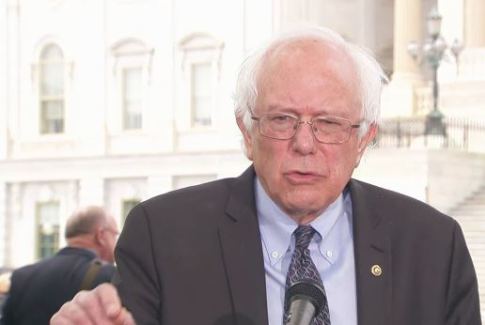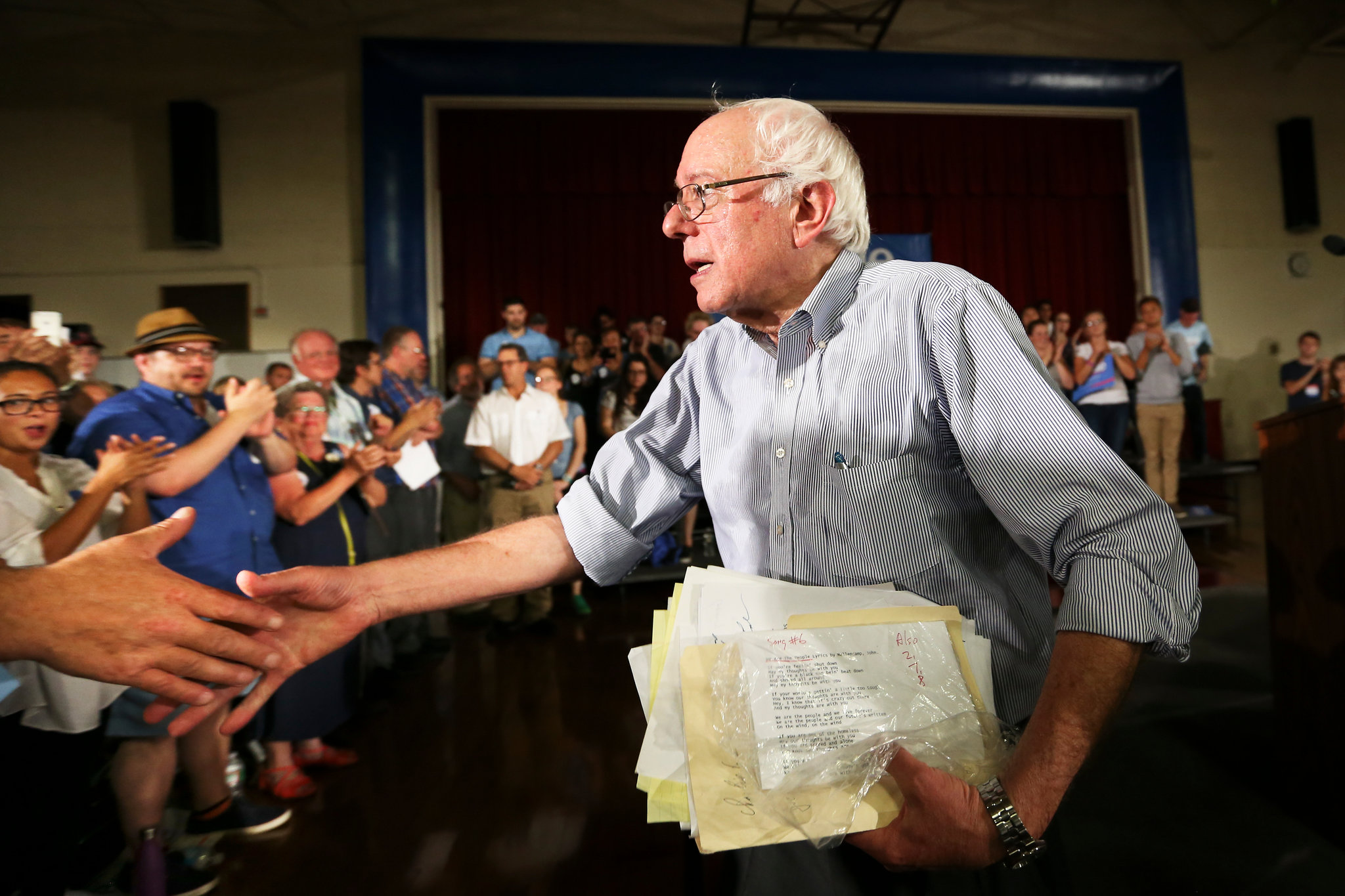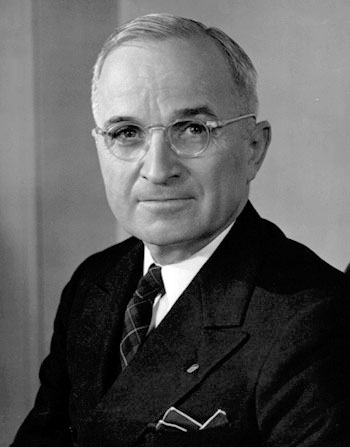
Bernie Sanders Is About as Radical as Harry Truman

"Bernie Sanders" by United States Congress - http://sanders.senate.gov/. Licensed under Public Domain via Wikimedia Commons.Harry_S._Truman

By Robert Kuttner

The mainstream media continues to be shocked that Bernie Sanders keeps gaining traction against frontrunner Hillary Clinton. However, if you look at what Sanders actually stands for, it is well within the mainstream of what used to be the Democratic Party.

Ever since Jimmy Carter, it has been evident that much of the Democratic electorate, and for that matter much of the country, is more progressive in its core values than what Democratic presidents have been offering. As big money has crowded out grass-roots democracy, the policies that people crave are simply not on offer.

So there is a pent-up demand for a candidate who can articulate popular frustrations. The fact that a 74-year-old, self-described socialist transplant from Brooklyn to Burlington, Jewish no less, is the surging vessel of these demands only tells you how deeply felt they must be.

But Bernie is no more radical than, say, Harry Truman, FDR or LBJ (when he was thinking about domestic policies). My friend Peter Dreier, a few months ago, performed a real service when he compared key Sanders positions with public opinion generally.

As Dreier reported, overwhelming majorities of Americans support a higher minimum wage: 74 percent think corporations have too much influence; 73 percent favor tougher regulation of Wall Street; 58 percent support breaking up big banks; 79 percent think the wealthy don’t pay their fair share of taxes; 85 percent favor paid family leave; 80 percent of Democrats and half the public generally support single-payer Medicare for all; well over 70 percent of Americans support workers’ right to unionize; and on and on.

No wonder Sanders is gaining ground.

Republicans have been disparaging Democrats as socialists — even centrist ones like Barack Obama — ever since FDR. So if this be socialism, let’s make the most of it.

Read more at The Huffington Post

How an obscure drug’s 4,000% price increase might finally spur action on soaring health-care costs

imrs.php

By Carolyn Johnson

Spectacularly high drug prices have become a political punching bag, especially since Turing Pharmaceuticals struck a nerve by increasing the price of a 62-year-old drug by more than 4,000 percent — a mind-boggling increase similar to waking up one day and finding out a gallon of gas costs nearly $100.

Hillary Rodham Clinton announced on Twitter that she’d lay out a plan to help control the “price gouging” in the pharmaceutical industry, which she called “outrageous.” Meanwhile, Sen. Bernie Sanders (I-Vt.) and Rep. Elijah E. Cummings (D-Md.) this summer launched an investigation into exorbitant drug prices and began sending letters to drug companies requesting information about their prices.

The details do indeed turn out to be as insane as they sound. But behind them lurks a real lesson about the way drugs are priced in the United States and what role they actually play in the trillion-dollar fight over controlling health-care costs.

New York-based Turing bought the drug called Daraprim for $55 million this summer. It is used to treat toxoplasmosis, a parasitic infection that can be severe in patients with compromised immune systems, such as HIV, and for pregnant women. Earlier this month, the head of the Infectious Diseases Society of America and the HIV Medicine Association condemned the price increase from $13.50 a pill to $750, noting that the average cost per year for a patient weighing more than 132 pounds would be $634,500

Read more at The Washington Post

Nate Silver: Trump Has About 5% Chance Of Winning

Statistician and writer Nate Silver joins Anderson Cooper to share his evaluation of the Trump campaign.

ANDERSON COOPER, CNN: You might have noticed, we talked a bit about polls around here, so does Donald Trump, so do all kinds of candidates whether they’re gaining or boasting or slipping and complaining. For better or worse, polling drives the conversation right now and a new conversation started comes out pretty much daily.

Our next guest made his reputation by picking the right polling data and using it much more — well to make much more accurate predictions, extremely accurate predictions. Nate Silver, FiveThirtyEight.com joins us tonight to talk about what the numbers can and can’t say right now about the state of the race.

So it’s really fascinating because you put the chance of Donald Trump or Ben Carson actually getting the GOP nomination and put it around 5 percent.

NATE SILVER, FIVETHIRTYEIGHT: Maybe about 5 percent each, somewhere around there.

Read more at RealClearPolitics

Bernie Sanders Declares War On America’s Corrupt For Profit Prison System With New Bill

bernie-sanders-announces-2016

Bernie Sanders is striking back at corporate America’s prison industrial complex with a new bill that abolishes for profit prisons.

In a statement, Sanders discussed his new legislation:

It is clear to most Americans that we need major reforms in our broken criminal justice system. We need to end the tragic reality that the United States has more people in jail than any other country on earth, and that the people being incarcerated are disproportionately black and Hispanic. We need to take a hard look at why the rate of recidivism in this country is so high and why we are not developing successful paths back to civil society for those who serve prison time. Further we need to end, once and for all, the disgraceful practice of corporations profiting from the incarceration of Americans.

As a nation, our goal must be to do everything we can to create the conditions that prevent mass incarceration. At a time when we are spending $50 billion a year on our correctional system, it makes a lot more sense to me to be investing in jobs and education for our young people than in more and more jails. Not only can we prevent thousands of lives from being destroyed, we can save billions of taxpayer dollars. Locking people up is a lot more expensive than schools.

My legislation will eliminate federal, state and local contracts for privately run prisons within 2 years. It will reinstate the federal parole system. It will increase oversight and eliminate the overcharging of prisoners by private companies for banking and other services. It will end the mandatory quota of immigrants detained. It will require ICE to improve the monitoring of detention facilities and eliminate private detention centers within 2 years.

The private prison industry makes money by keeping individuals incarcerated. The motivation in a for-profit prison system has nothing to do with the common good or the benefit of society. Private prisons make money for their corporate owners by keeping as many people locked up as cheaply as possible.

Read more at PoliticusUSA

Bernie Sanders’s Success in Attracting Small Donors Tests Importance of ‘Super PACs’

 To fund his presidential campaign, Senator Bernie Sanders has relied on tens of thousands of donors whose average gift is $31.30. Credit Cheryl Senter/Associated Press
To fund his presidential campaign, Senator Bernie Sanders has relied on tens of thousands of donors whose average gift is $31.30. Credit Cheryl Senter/Associated Press

By Eric Lichtblau

WASHINGTON — Donna Mae Litowitz, a Miami Beach retiree, likes Senator Bernie Sanders of Vermont so much that three months ago she sent his presidential campaign $10,000. His campaign sent back all but $2,700 because it was more than he was allowed to take under federal election law, but she wishes he had kept it all.

“I like what Sanders stands for, and he says what needs to be said,” said Ms. Litowitz, who gave money in 2008 to Senator Barack Obama’s presidential campaign. “And I don’t like Hillary Clinton.”

In an election dominated by million-dollar donations to “super PACs,” Ms. Litowitz qualifies in Mr. Sanders’s insurgent campaign as a big donor. Unlike almost all of the other major Democratic and Republican candidates this year, Mr. Sanders has refused to accept support from super PACs, relying instead on supporters like Ms. Litowitz as well as tens of thousands of small donors giving as little as $5 or $10.

The average donation, according to campaign officials, is $31.30.

Read more at The New York Times

Why Surprising Numbers of Republicans Have Been Voting for Bernie Sanders in Vermont

If [Sanders] ends up being the Democratic nominee for president, his GOP opponent is going to have a very hard time beating him.

United States Senator Bernie Sanders of Vermont

By Thom Hartmann

Ann Coulter knows who she wants to be the Democratic nominee for president, and who that person is, well, it may surprise you.

She wants Hillary Clinton to be the nominee, and thinks that if Bernie gets the nod, he’ll beat whoever the Republicans come up with to run against him.

You won’t hear me say this often, but Ann Coulter is right.

If Bernie Sanders ends up being the Democratic nominee for president, and it looks more and more every day like he will be, his Republican opponent is going to have a very hard time beating him.

And that’s because of all the Democratic candidates running, Bernie Sanders has the best chance of capturing Republican votes.

Read more at Alternet

Supreme Court Ruling Makes Same-Sex Marriage a Right Nationwide

By Adam Liptak in The New York Times

 The White House was illuminated in honor of same-sex marriage.
The White House was illuminated in honor of same-sex marriage.

WASHINGTON — In a long-sought victory for the gay rights movement, the Supreme Court ruled by a 5-to-4 vote on Friday that the Constitution guarantees a right to same-sex marriage.

“No longer may this liberty be denied,” Justice Anthony M. Kennedy wrote for the majority in the historic decision. “No union is more profound than marriage, for it embodies the highest ideals of love, fidelity, devotion, sacrifice and family. In forming a marital union, two people become something greater than once they were.”

Marriage is a “keystone of our social order,” Justice Kennedy said, adding that the plaintiffs in the case were seeking “equal dignity in the eyes of the law.”

The decision, which was the culmination of decades of litigation and activism, set off jubilation and tearful embraces across the country, the first same-sex marriages in several states, and resistance — or at least stalling — in others. It came against the backdrop of fast-moving changes in public opinion, with polls indicating that most Americans now approve of the unions.

The court’s four more liberal justices joined Justice Kennedy’s majority opinion. Each member of the court’s conservative wing filed a separate dissent, in tones ranging from resigned dismay to bitter scorn.

Read more at The New York Times

A crisis for seniors who rely on Social Security

 By Rep. John Larson (D-Conn.) - 06/10/15 05:31 PM EDT Photo credit:  Greg Nash
By Rep. John Larson (D-Conn.) – 06/10/15 05:31 PM EDT Photo credit: Greg Nash

It seems every time we talk about the long-term future of Social Security, many in Washington start clamoring to raise the retirement age or propose other ways to trim Social Security’s modest benefits. Those calling for cuts are missing the dire state of retirement security for the typical American. Traditional pensions have become a thing of the past, and stagnant wages are making it harder and harder to put aside savings. For the two-thirds of retirees who rely on Social Security for a majority of their income, there is not a Social Security crisis, there is a retirement crisis. That is why we must preserve and enhance the one program Americans have always been able to count on.

Just the other week I sat down with seniors in Glastonbury, Conn., to discuss our nation’s retirement crisis. These men and women hail from all walks of life: veterans, small-business owners, homemakers and machinists. They’ve built and rebuilt this country through wars and recessions. I spoke with one man who spent his life as a lineman, his fingers now crooked and gnarled from a lifetime helping to usher America into the Digital Age. Can we really in good conscience ask the millions of men and women, who have already given so much, to keep pushing well past their breaking point? How does it make sense to push the retirement age ever higher or cut benefits at a time when people need them most?

We can shore up Social Security for future generations without needlessly slashing benefits for people like those seniors in Glastonbury or their children and grandchildren. That is why I have been joined by more than 60 of my colleagues in putting forth H.R. 1391, the Social Security 2100 Act.

Rather than cut benefits or hike the retirement age, this proposal would increase benefits across the board. It would provide a better cost-of-living adjustment that would reflect the true cost seniors incur, such as higher medical expenses. It would also ensure that those who have paid into the system won’t retire into poverty by increasing minimum payments. Because more seniors are working into their retirement years, this proposal provides a tax cut to 11 million beneficiaries by raising the level of income individuals and couples can earn before their Social Security benefits are taxed. All of these provisions will strengthen and enhance Social Security for current beneficiaries and generations to come.

The Social Security 2100 Act keeps the system solvent for the next 75 years and beyond, according to the independent analysis of the Social Security Administration’s chief actuary, and does so without cutting benefits or contributing a dime to the deficit.

How do we do this? First, we ask individuals making more than $400,000 a year to contribute into Social Security in the same way as the rest of us. Currently, those with earnings above $118,500 no longer have to pay into the system. To put it another way, LeBron James has made his yearly contribution to Social Security by about lunchtime on New Year’s Day.

Second, we slowly introduce an increase to the contributions both workers and employers make. Over the span of 25 years, it would mean an additional 0.05 percent each year. A worker making $50,000 a year would pay an additional 50 cents per week each year to Social Security.

Read more at The Hill

Bernie Sanders Announces His Candidacy for President of the United States

George W. Bush’s CIA Briefer: Bush and Cheney Falsely Presented WMD Intelligence to Public

By David Corn in Mother Jones

On “Hardball,” Michael Morell concedes the Bush administration misled the nation into the Iraq War.

Former CIA Deputy Director Michael Morell is sworn in as he testifes before the House Intelligence Committee. Manuel Balce Ceneta/AP

For a dozen years, the Bush-Cheney crowd have been trying to escape—or cover up—an essential fact of the W. years: President George Bush, Vice President Dick Cheney, and their lieutenants misled the American public about the WMD threat supposedly posed by Saddam Hussein in order to grease the way to the invasion of Iraq. For Bush, Cheney, and the rest, this endeavor is fundamental; it is necessary to protect the legitimacy of the Bush II presidency. Naturally, Karl Rove and other Bushies have quickly tried to douse the Bush-lied-us-into-war fire whenever such flames have appeared. And in recent days, as Jeb Bush bumbled a question about the Iraq War, he and other GOPers have peddled the fictitious tale that his brother launched the invasion because he was presented lousy intelligence. But now there’s a new witness who will make the Bush apologists’ mission even more impossible: Michael Morell, a longtime CIA official who eventually became the agency’s deputy director and acting director. During the preinvasion period, he served as Bush’s intelligence briefer.

Appearing on MSNBC’s Hardball on Tuesday night, Morell made it clear: The Bush-Cheney administration publicly misrepresented the intelligence related to Iraq’s supposed WMD program and Saddam’s alleged links to Al Qaeda.

Host Chris Matthews asked Morell about a statement Cheney made in 2003: “We know he [Saddam Hussein] has been absolutely devoted to trying to acquire nuclear weapons. And we believe he has, in fact, reconstituted nuclear weapons.” Here’s the conversation that followed:

MATTHEWS: Was that true?

MORELL: We were saying—

MATTHEWS: Can you answer that question? Was that true?

MORELL: That’s not true.

MATTHEWS: Well, why’d you let them get away with it?

Read more at Mother Jones