Why Obama Should Stand Up to the Saudis

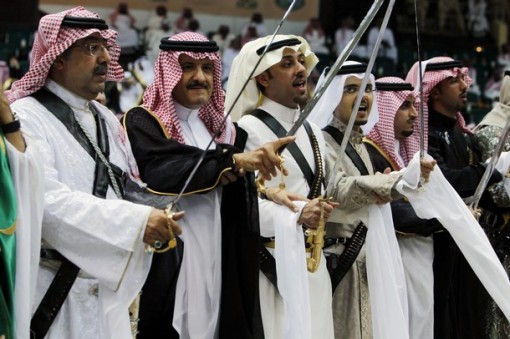
Saudi-princes2_1-510x339

By Dana E. Abizaid

With much of the US press focused on the daily images of barbarity coming out the lands occupied by the Islamic State in Iraq and Syria (ISIS), the brutal practices of the real Islamic State, Saudi Arabia, receive scant attention. The reasons for this are as sickening as they are obvious: a major oil supplier to the West and a nation that casts itself as the mortal enemy of Shia Iran has been courted and coddled by the US since the end of WWII to keep domestic gas prices low.

The United States maintains a special relationship with the Saudi Dynasty that contradicts every ideal America stands for. Nobody should hold his breath waiting for the US media or government to finally and thoroughly expose the draconian policies of the desert kingdom, but President Obama does have the opportunity in one case to pressure the Saudis into granting amnesty to Ali-Mohammad al-Nimr and thereby earn a small part of his 2009 Nobel Peace Prize. In a recent interview with the Guardian, al-Nimr’s mother pleaded that Obama has the power to “interfere and rescue my son.”

The Saudi government convicted al-Nimr – 17 at the time – of possessing firearms while protesting for Shia rights in 2012. But it is clear that is not the only reason the young man is sentenced to be beheaded and crucified. His uncle is the prominent dissident Shia cleric Nimr al-Nimr who has also been sentenced to death for criticizing the Saudi State.

If the United States is ever to devise and implement an effective Middle East policy a reevaluation of its relationship with Saudi Arabia will be essential. Standing up for al-Nimr is vital in this regard. By pressuring the Saudis to pardon al-Nimr, Obama can win three immediate victories important to this reevaluation. First, he could portray himself as a seeker of justice in the spirit of his Nobel. Second, he could win some goodwill amongst those Shia the Saudis have repressed for generations. Lastly, his actions could open a dialogue in the US media that might educate the American public to crimes that are committed with its tacit support.

Since the US media and government rarely reprimand the Saudis, the American people have little understanding of the grave human rights abuses that take place daily in the kingdom. According to Amnesty International, the Saudis executed 102 people in the first six months of 2015. Death by sword beheading – often public – is the preferred punishment for adultery, homosexuality, and witchcraft (basically, not having radical Sunni Wahhabi beliefs). Children and the mentally handicapped do not escape the sword.

Read more at CounterPunch

Dana E. Abizaid teaches European History at the Istanbul International Community School.
Canada election: Liberals sweep to power

Canada’s Liberal Party has decisively won parliamentary elections, ending nine years of Conservative rule, partial results show.

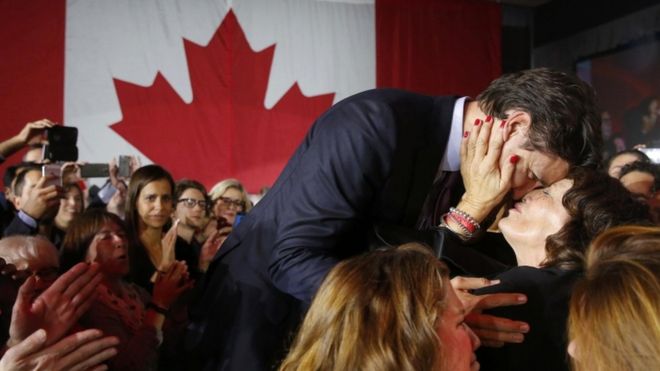
 Justin Trudeau is congratulated by his mother Margaret after the Liberal victory
Justin Trudeau is congratulated by his mother Margaret after the Liberal victory

The Liberals, led by Justin Trudeau, are leading in 185 electoral districts.

The son of late Prime Minister Pierre Trudeau is now poised to form a majority government, Canada’s CBC and CTV networks predict.

Incumbent Conservative PM Stephen Harper – whose party is leading in 103 districts – accepted defeat.

Speaking after the polls closed, he said he had already congratulated Mr Trudeau, saying the Conservatives would accept the results “without hesitation”.

Read more at BBC.com

Why Saudi Arabia Gets Away With Murder

The kingdom is set to execute a young man for participating in the Arab Spring as a 17-year-old—and the Obama administration has admitted it’s not going to do a thing about it.

Ali Mohammed al-Nimr Image via Facebook
Ali Mohammed al-Nimr
Image via Facebook

By Jay Michaelson

An Islamic regime in the Middle East may soon behead a young man and hang his corpse up for display. ISIS? Iran? No—America’s ally Saudi Arabia. And because it’s the Saudis, the Obama administration’s silence has been deafening.

In 2012, Ali Mohammed al-Nimr was a 17-year-old pro-democracy activist in the Arab Spring. After harsh government crackdowns, protests turned violent, particularly in Qatif, a majority-Shiite region in majority-Sunni Saudi Arabia. Al-Nimr was arrested, along with others, and charged, at first, with relatively low-level political crimes related to the protests, such as “going out to a number of marches, demonstrations, and gatherings against the state and repeating some chants against the state.”

But then al-Nimr’s uncle, a prominent Shiite cleric, began giving fiery sermons against the regime. He, too, was arrested, on more serious charges of inciting sectarian strife, aiding terrorists, and “insulting Gulf leaders and scholars.”

Suddenly, the younger al-Nimr’s charges were increased as well, to include the capital crimes of attacking police and sheltering criminals. According to al-Nimr’s father, the teen was tortured until he confessed, and he was subsequently sentenced to death.

Al-Nimr would, however, be the first solely political prisoner to be executed in Saudi Arabia in some time—and based on flimsy evidence, an allegedly coerced confession, and acts of political dissidence committed when he was 17. How could such a thing happen, without a peep of protest from the United States?

Because it’s Saudi Arabia.

As outrageous as killing a kid for political activism may be, al-Nimr is just the latest collateral damage in our long, troubling marriage of convenience with the House of Saud. We need the Saudis for the fight against ISIS, for oil, and for providing some semblance of stability in the most unstable region on the planet. As my colleague Michael Tomasky wrote in January, we’re stuck with Saudi Arabia, because as bad as the Saudis are, the alternatives are worse.

Adding insult to injury, Saudi Arabia was just named to a UN Human Rights panel—only a subsidiary committee, and part of a regionally based rotation, but outrageous nonetheless given the country’s appalling human rights record.

Read more at The Daily Beast

 This Is What Greece’s Refugee Crisis Really Looks Like

“Thanks to God I have made it here. I am free, I am alive!”

 Refugees arriving on the isle of Lesbos in a dinghy from Turkey. (Lazar Simeonov)
Refugees arriving on the isle of Lesbos in a dinghy from Turkey. (Lazar Simeonov)

By Jesse Rosenfeld

Lesbos, Athens, and northern Greece—In the baking midday August heat on the Greek island of Lesbos, Ziad Mouatash bounces out of an overcrowded inflatable raft and touches EU soil for the first time. The 22-year-old from Yarmouk—the Palestinian refugee camp on the edge of Damascus that has been besieged and bombed since 2012 by Bashar al-Assad’s forces and recently invaded by ISIS and the Al Qaeda–affiliated Nusra Front—hugs everyone around him, ecstatic to be alive.

From the Greek shore, activists and locals had looked on helplessly as the boat’s motor broke down two miles away, water pouring into the barely floating rubber dinghy. Children and adults alike cried desperately for help, until they were towed to Greece by another boat of refugees coming from Turkey.

Mouatash paid human traffickers in Turkey over 1,000 euros for this near-death experience, but as far as he’s concerned, it was a far less risky choice than continuing to hide out in deteriorating Damascus, which he’d abandoned for Turkey two weeks before. As a Palestinian who grew up in Syria’s refugee camps, he is stateless, but he has a brother in Paris and hopes to start a new life in France.

He paces up and down the shoreline, unsure of which direction to go, while local activists try to bring the new arrivals together to tell them that they need to start a 40-mile walk to a registration center on the other side of the island.

 Although he has escaped the horrors of Syria’s grinding civil war, Mouatash is just beginning the difficult journey through Europe. He will have to cross more borders illegally; rest in filthy, makeshift camps; pay traffickers to help him cross those borders; dodge border police; and sleep in parks and fields, before he can reunite with his brother. Still, Mouatash is one of the lucky ones. Four days after his arrival, a raft off the Greek island of Kos capsized and six Syrians—including a baby—drowned.

Read more at The Nation

 Bernie Sanders Speaks

In his most revealing interview, the socialist presidential candidate sets out his vision for America.

 (Photography by Marius Bugge)
(Photography by Marius Bugge)

By John Nichols in The Nation

 When Vermont Senator Bernie Sanders told The Nation last year that he was “prepared to run for president,” he said he would do so only if it was clear that progressives were enthusiastic about a movement campaign seeking nothing less than “a political revolution.” It was an audacious proposal—but after traveling the country for a year, Sanders decided that the enthusiasm was there and announced in late April as a candidate for the Democratic nomination. There were plenty of doubters then. Two months into the campaign, however, everything about this candidacy—the crowds, the poll numbers, the buzz—is bigger than expected. That says something about Sanders. But it also says something about the prospects for progressive politics. In late June, The Nation sat down with Sanders for several conversations that asked the longtime Nation reader (“started when I was a University of Chicago student in the early 1960s”) to put not just his campaign but the moment in historical perspective for our 150th-anniversary issue:


The Nation: Your campaign for the presidency has surprised people. The crowds are big; the poll numbers are stronger than the pundits predicted. You’re a student of political history. Put what’s happening now in perspective. Are we at one of those pivot points—as we saw in the 1930s—where our politics could open up and take the country in a much more progressive direction?


Sanders: Obviously, we’re not in the midst of a massive depression, as we were in the 1930s. But I think the discontent of the American people is far, far greater than the pundits understand. Do you know what real African-American youth unemployment is? It’s over 50 percent. Families with a member 55 or older have literally nothing saved for retirement. Workers are worried about their jobs ending up in China. They’re worried about being fired when they’re age 50 and being replaced at half-wages by somebody who is 25. They’re disgusted with the degree that billionaires are able to buy elections. They are frightened by the fact that we have a Republican Party that refuses to even recognize the reality of climate change, let alone address this huge issue.

In 1936, when Roosevelt ran for reelection, he welcomed the hatred of what he called “the economic royalists”—today, they’re the billionaire class—and I’m prepared to do that as well. That’s the kind of language the American people are ready to hear.

The Nation: As long as we’re talking about the evolution of public policy, let’s talk about the evolution of a word: socialism. You appeared on ABC’s This Week and, when you were asked whether a socialist can be elected president, you did not blink; you talked about socialism in positive, detailed terms. I don’t believe a presidential candidate has ever done that on a Sunday-morning show.

Sanders: Mitch McConnell, the Republican leader in the Senate, often criticizes President Obama, incorrectly, for trying to push “European-style socialism,” and McConnell says the American people don’t want it. First of all, of course, Obama is not trying to push European-style socialism. Second of all, I happen to believe that, if the American people understood the significant accomplishments that have taken place under social-democratic governments, democratic-socialist governments, labor governments throughout Europe, they would be shocked to know about those accomplishments. One of the goals of this campaign is to advance that understanding…. How many Americans know that in virtually every European country, when you have a baby, you get guaranteed time off and, depending on the country, significant financial benefits as well. Do the American people know that? I doubt it. Do the American people even know that we’re the only major Western industrialized country that doesn’t guarantee healthcare for all? Most people don’t know that. Do the American people know that in many countries throughout Europe, public colleges and universities are either tuition-free or very inexpensive?

I have always believed that the countries in Scandinavia have not gotten the kind of honest recognition they deserve for the extraordinary achievements they have made…. The Danish ambassador, whom I talked to a couple of years ago, said to me that in Denmark it is very, very hard to be poor; you really have to literally want to be outside of the system. Well, that’s pretty good. In Denmark, all of their kids can go to college; not only do they go for free, they actually get stipends. Healthcare is, of course, a right for all people. They have a very strong childcare system, which to me is very important. Their retirement system is very strong. They are very active in trying to protect their environment…. And, by the way, the voter turnout in those countries is much higher; in Denmark, in the last election, it was over 80 percent. Political consciousness is much higher than it is in the United States. It’s a more vibrant democracy in many respects. So why would I not defend that? Do they think I’m afraid of the word? I’m not afraid of the word.

Read more at The Nation

Have Turkish Voters Renounced Islamist Dictatorship?

Turkey sees end of single party gov’t as AK Party vote drops significantly – Today’s Zaman

800px-Turkish-flag.svg
By Nevit Dilmen (Image:Turkishflag.jpg) [CC BY-SA 2.0], via Wikimedia Commons
After 13 years of domination as a single-party government, the Justice and Development Party (AK Party), which has been receiving growing criticism for pursuing highly divisive, authoritarian and repressive policies, saw a significant erosion of support in Sunday’s election and it failed to secure the 276 seats in the Parliament necessary to continue its single-party rule for another term.

The pro-Kurdish Peoples’ Democratic Party’s (HDP), which opted to run as a party in this election for the first time, rather than fielding independent candidates to circumvent the country’s 10 percent election threshold, managed to pass the barrier, which reduced the number of seats in Parliament that would have otherwise gone to the AK Party. Hence, the establishment of a coalition government is back on Turkey’s agenda after more than a decade.

The unofficial results of the election, which many said was more like a referendum in that would determine the fate and political future of the country – becoming either more authoritarian or denying President Erdoğan the changes he aspires to and curbing his power – indicated that the AK Party received 40.6 percent, the main opposition Republican People’s Party (CHP) received 25.3 percent, the Nationalist Movement Party (MHP) received 16 percent while the HDP, which widened its appeal beyond its core Kurdish vote to center-left and secularist segments disillusioned with Erdoğan, received 12.7 percent of the nationwide vote. These percentages translate into 257 seats for the AK Party, 131 for the CHP, 83 for the MHP and 79 for the HDP.

Sunday’s vote was held amid concerns of vote rigging, prompting more than 50,000 people to sign up to serve as election monitors. The fears were not without reason, as last year’s local elections, held on March 30, were overshadowed by allegations of election fraud due to the discrepancies between the numbers recorded at polling stations and those actually entered into the country’s election authority, the Higher Election Board (YSK), in addition to suspicious power outages taking place across 22 provinces during the vote count.

On Sunday, the mood was tense at some polling stations, particularly in the country’s predominantly Kurdish Southeast, after a bombing on Friday killed two people and wounded at least 200 at an election rally for the HDP, which has been a frequent target of violence in the run-up to the polls.

Read more at Today’s Zaman

The Trolls Who Came In From The Cold

A laptop computer and a newspaper show reports about the arrival of former CIA contractor Edward Snowden to Russia, at Moscow's Sheremetyevo Airport, in June 2013.
A laptop computer and a newspaper show reports about the arrival of former CIA contractor Edward Snowden to Russia, at Moscow’s Sheremetyevo Airport, in June 2013.

By Viktor Rezunkov

ST. PETERSBURG — Last May, Tatiana N decided she wanted a higher salary than the average journalist can expect.

After responding to an advertisement in the popular HeadHunter job-search website, she became a Kremlin-paid Internet troll. Tatiana — who, like others interviewed for this story, asked that her last name not be used — worked out of a 2,500-square-meter warehouse in the suburbs of St. Petersburg.

The job paid 40,000 rubles a month, significantly more than the 25,000-30,000 most journalists make. But it came, she said, “with pain.”

Tatiana joined a round-the-clock operation in which an army of trolls disseminated pro-Kremlin and anti-Western talking points on blogs and in the comments sections of news websites in Russia and abroad.

The operation, Internet Research, is financed through a holding company headed by President Vladimir Putin’s “personal chef,” Evgeny Prigozhin.

“So you write, write, write, from the point of view of anyone,” Tatiana, 22, says.

“You could be [posing as] a housewife who bakes dumplings and suddenly decides: ‘I have an opinion about what Putin said! And this action by Vladimir Vladimirovich saves Russia.”

The roughly 400 employees work 12-hour shifts and are split into various departments. Some focus on writing up themes and assignments, others concentrate on commenting, and others work on graphics for social media.

The daily assignments — shown in a document first published on March 11 by independent St. Petersburg newspaper My Region — are usually drawn directly from pro-Kremlin media and go into sometimes excruciating detail about the message the bloggers and commenters are supposed to relay.

One assignment instructed trolls how to frame the February 27 assassination of opposition figure Boris Nemtsov: Either it was orchestrated by Ukrainian oligarchs to frame Russia and harm Moscow’s relations with the West, or it was carried out by Nemtsov’s supporters as a “provocation” ahead of opposition protests.

Lena N, another former employee, says she stopped working at Internet Research after refusing to blog the company line about Nemtsov’s killing.

“It was necessary to bring people to believe that the killing of Boris Nemtsov was a provocation before the march and a murder carried out by his own [supporters],” she says.

Radio Free Europe

Even at $10/barrel, oil can’t match solar on cost

jewel1944's avatarWorld News Forum

Standard Oil Refinery No. 1 in Cleveland, Ohio Standard Oil Refinery No. 1 in Cleveland, Ohio, 1889

One of the biggest banks in the Middle East and the oil-rich Gulf countries says that fossil fuels can no longer compete with solar technologies on price, and says the vast bulk of the $US48 trillion needed to meet global power demand over the next two decades will come from renewables.

The report from the National Bank of Abu Dhabi says that while oil and gas has underpinned almost all energy investments until now, future investment will be almost entirely in renewable energy sources.

The report is important because the Gulf region, the Middle East and North Africa will need to add another 170GW of electricity in the next decade, and the major financiers recognise that the cheapest and most effective way to go is through solar and wind. It also highlights how even the biggest financial institutions in the Gulf…

View original post 114 more words

Fethullah Gulen: Turkey’s Eroding Democracy

 Hizmet supporters in Istanbul protesting the government’s harassment of journalists.   Credit Sedat Suna/European Pressphoto Agency
Hizmet supporters in Istanbul protesting the government’s harassment of journalists.
Credit Sedat Suna/European Pressphoto Agency

By Fethullah Gulen

SAYLORSBURG, Pa. — It is deeply disappointing to see what has become of Turkey in the last few years. Not long ago, it was the envy of Muslim-majority countries: a viable candidate for the European Union on its path to becoming a functioning democracy that upholds universal human rights, gender equality, the rule of law and the rights of Kurdish and non-Muslim citizens. This historic opportunity now appears to have been squandered as Turkey’s ruling party, known as the A.K.P., reverses that progress and clamps down on civil society, media, the judiciary and free enterprise.

Turkey’s current leaders seem to claim an absolute mandate by virtue of winning elections. But victory doesn’t grant them permission to ignore the Constitution or suppress dissent, especially when election victories are built on crony capitalism and media subservience. The A.K.P.’s leaders now depict every democratic criticism of them as an attack on the state. By viewing every critical voice as an enemy — or worse, a traitor — they are leading the country toward totalitarianism.

The latest victims of the clampdown are the staff, executives and editors of independent media organizations who were detained and are now facing charges made possible by recent changes to the laws and the court system. The director of one of the most popular TV channels, arrested in December, is still behind bars. Public officials investigating corruption charges have also been purged and jailed for simply doing their jobs. An independent judiciary, a functioning civil society and media are checks and balances against government transgressions. Such harassment sends the message that whoever stands in the way of the ruling party’s agenda will be targeted by slander, sanctions and even trumped-up charges.

Turkey’s rulers have not only alienated the West, they are also now losing credibility in the Middle East. Turkey’s ability to assert positive influence in the region depends not only on its economy but also on the health of its own democracy.

The core tenets of a functioning democracy — the rule of law, respect for individual freedoms — are also the most basic of Islamic values bestowed upon us by God. No political or religious leader has the authority to take them away. It is disheartening to see religious scholars provide theological justification for the ruling party’s oppression and corruption or simply stay silent. Those who use the language and symbols of religious observance but violate the core principles of their religion do not deserve such loyalty from religious scholars.

Speaking against oppression is a democratic right, a civic duty and for believers, a religious obligation. The Quran makes clear that people should not remain silent in the face of injustice: “O you who believe! Be upholders and standard-bearers of justice, bearing witness to the truth for God’s sake, even though it be against your own selves, or parents or kindred.”

For the past 50 years, I have been fortunate to take part in a civil society movement, sometimes referred to as Hizmet, whose participants and supporters include millions of Turkish citizens. These citizens have committed themselves to interfaith dialogue, community service, relief efforts and making life-changing education accessible. They have established more than 1,000 modern secular schools, tutoring centers, colleges, hospitals and relief organizations in over 150 countries. They are teachers, journalists, businessmen and ordinary citizens.

Read more in The New York Times/The Opinion Pages

Tyranny’s False Comfort: Why Rights Aren’t Wrong in Tough Times

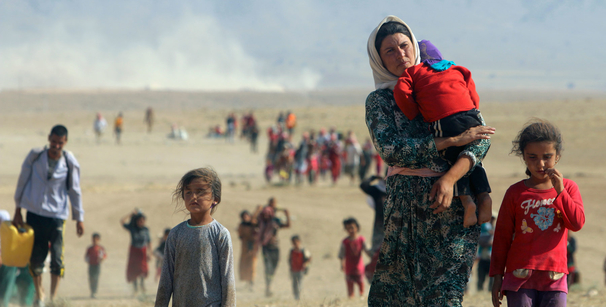
 Displaced people from the Yezidi sect, fleeing violence from forces linked to the extremist group Islamic State (also known as ISIS) in the northern Iraqi town of Sinjar, walk towards the Syrian border in August 2014. © 2014 Reuters

Displaced people from the Yezidi sect, fleeing violence from forces linked to the extremist group Islamic State (also known as ISIS) in the northern Iraqi town of Sinjar, walk towards the Syrian border in August 2014. © 2014 Reuters

By Kenneth Roth, Executive Director, Human Rights Watch

The world has not seen this much tumult for a generation. The once-heralded Arab Spring has given way almost everywhere to conflict and repression. Islamist extremists commit mass atrocities and threaten civilians throughout the Middle East and parts of Asia and Africa. Cold War-type tensions have revived over Ukraine, with even a civilian jetliner shot out of the sky. Sometimes it can seem as if the world is unraveling.

Many governments have responded to the turmoil by downplaying or abandoning human rights. Governments directly affected by the ferment are often eager for an excuse to suppress popular pressure for democratic change. Other influential governments are frequently more comfortable falling back on familiar relationships with autocrats than contending with the uncertainty of popular rule. Some of these governments continue to raise human rights concerns, but many appear to have concluded that today’s serious security threats must take precedence over human rights. In this difficult moment, they seem to argue, human rights must be put on the back burner, a luxury for less trying times.

That subordination of human rights is not only wrong, but also shortsighted and counterproductive. Human rights violations played a major role in spawning or aggravating most of today’s crises. Protecting human rights and enabling people to have a say in how their governments address the crises will be key to their resolution. Particularly in periods of challenges and difficult choices, human rights are an essential compass for political action.

Read the entire Keynote Address of the Human Rights Watch World Report 2015