Why Saudi Arabia Gets Away With Murder

The kingdom is set to execute a young man for participating in the Arab Spring as a 17-year-old—and the Obama administration has admitted it’s not going to do a thing about it.

Ali Mohammed al-Nimr Image via Facebook
Ali Mohammed al-Nimr
Image via Facebook

By Jay Michaelson

An Islamic regime in the Middle East may soon behead a young man and hang his corpse up for display. ISIS? Iran? No—America’s ally Saudi Arabia. And because it’s the Saudis, the Obama administration’s silence has been deafening.

In 2012, Ali Mohammed al-Nimr was a 17-year-old pro-democracy activist in the Arab Spring. After harsh government crackdowns, protests turned violent, particularly in Qatif, a majority-Shiite region in majority-Sunni Saudi Arabia. Al-Nimr was arrested, along with others, and charged, at first, with relatively low-level political crimes related to the protests, such as “going out to a number of marches, demonstrations, and gatherings against the state and repeating some chants against the state.”

But then al-Nimr’s uncle, a prominent Shiite cleric, began giving fiery sermons against the regime. He, too, was arrested, on more serious charges of inciting sectarian strife, aiding terrorists, and “insulting Gulf leaders and scholars.”

Suddenly, the younger al-Nimr’s charges were increased as well, to include the capital crimes of attacking police and sheltering criminals. According to al-Nimr’s father, the teen was tortured until he confessed, and he was subsequently sentenced to death.

Al-Nimr would, however, be the first solely political prisoner to be executed in Saudi Arabia in some time—and based on flimsy evidence, an allegedly coerced confession, and acts of political dissidence committed when he was 17. How could such a thing happen, without a peep of protest from the United States?

Because it’s Saudi Arabia.

As outrageous as killing a kid for political activism may be, al-Nimr is just the latest collateral damage in our long, troubling marriage of convenience with the House of Saud. We need the Saudis for the fight against ISIS, for oil, and for providing some semblance of stability in the most unstable region on the planet. As my colleague Michael Tomasky wrote in January, we’re stuck with Saudi Arabia, because as bad as the Saudis are, the alternatives are worse.

Adding insult to injury, Saudi Arabia was just named to a UN Human Rights panel—only a subsidiary committee, and part of a regionally based rotation, but outrageous nonetheless given the country’s appalling human rights record.

Read more at The Daily Beast

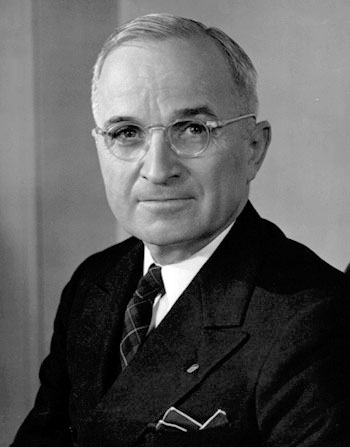
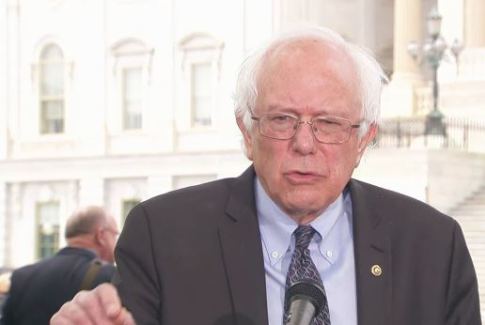
Bernie Sanders Is About as Radical as Harry Truman

"Bernie Sanders" by United States Congress - http://sanders.senate.gov/. Licensed under Public Domain via Wikimedia Commons.Harry_S._Truman

By Robert Kuttner

The mainstream media continues to be shocked that Bernie Sanders keeps gaining traction against frontrunner Hillary Clinton. However, if you look at what Sanders actually stands for, it is well within the mainstream of what used to be the Democratic Party.

Ever since Jimmy Carter, it has been evident that much of the Democratic electorate, and for that matter much of the country, is more progressive in its core values than what Democratic presidents have been offering. As big money has crowded out grass-roots democracy, the policies that people crave are simply not on offer.

So there is a pent-up demand for a candidate who can articulate popular frustrations. The fact that a 74-year-old, self-described socialist transplant from Brooklyn to Burlington, Jewish no less, is the surging vessel of these demands only tells you how deeply felt they must be.

But Bernie is no more radical than, say, Harry Truman, FDR or LBJ (when he was thinking about domestic policies). My friend Peter Dreier, a few months ago, performed a real service when he compared key Sanders positions with public opinion generally.

As Dreier reported, overwhelming majorities of Americans support a higher minimum wage: 74 percent think corporations have too much influence; 73 percent favor tougher regulation of Wall Street; 58 percent support breaking up big banks; 79 percent think the wealthy don’t pay their fair share of taxes; 85 percent favor paid family leave; 80 percent of Democrats and half the public generally support single-payer Medicare for all; well over 70 percent of Americans support workers’ right to unionize; and on and on.

No wonder Sanders is gaining ground.

Republicans have been disparaging Democrats as socialists — even centrist ones like Barack Obama — ever since FDR. So if this be socialism, let’s make the most of it.

Read more at The Huffington Post

American Slavery, Reinvented

The Thirteenth Amendment forbade slavery and involuntary servitude, “except as punishment for crime whereof the party shall have been duly convicted.”

lead_960

Crops stretch to the horizon. Black bodies pepper the landscape, hunched over as they work the fields. Officers on horseback, armed, oversee the workers.

To the untrained eye, the scenes in Angola for Life: Rehabilitation and Reform Inside the Louisiana State Penitentiary, an Atlantic documentary filmed on an old Southern slave-plantation-turned-prison, could have been shot 150 years ago. The imagery haunts, and the stench of slavery and racial oppression lingers through the 13 minutes of footage.

The film tells two overlapping stories: One is of accomplishment against incredible odds, of a man who stepped into the most violent maximum-security prison in the nation and gave the men there—discarded and damned—what society didn’t: hope, education, and a moral compass. Burl Cain, the warden of Angola Prison, which is in Louisiana, has created a controversial model for rehabilitation. Through work and religion, they learn to help each other, and try to become better fathers to their children on the outside. Perhaps the lucky few even find redemption.

But there is a second storyline running alongside the first, which raises disquieting questions about how America treats those on the inside as less than fully human. Those troubling opening scenes of the documentary offer visual proof of a truth that America has worked hard to ignore: In a sense, slavery never ended at Angola; it was reinvented.

Some viewers of the video might be surprised to learn that inmates at Angola, once cleared by the prison doctor, can be forced to work under threat of punishment as severe as solitary confinement. Legally, this labor may be totally uncompensated; more typically inmates are paid meagerly—as little as two cents per hour—for their full-time work in the fields, manufacturing warehouses, or kitchens. How is this legal? Didn’t the Thirteenth Amendment abolish all forms of slavery and involuntary servitude in this country?

Read more at The Atlantic

How an obscure drug’s 4,000% price increase might finally spur action on soaring health-care costs

imrs.php

By Carolyn Johnson

Spectacularly high drug prices have become a political punching bag, especially since Turing Pharmaceuticals struck a nerve by increasing the price of a 62-year-old drug by more than 4,000 percent — a mind-boggling increase similar to waking up one day and finding out a gallon of gas costs nearly $100.

Hillary Rodham Clinton announced on Twitter that she’d lay out a plan to help control the “price gouging” in the pharmaceutical industry, which she called “outrageous.” Meanwhile, Sen. Bernie Sanders (I-Vt.) and Rep. Elijah E. Cummings (D-Md.) this summer launched an investigation into exorbitant drug prices and began sending letters to drug companies requesting information about their prices.

The details do indeed turn out to be as insane as they sound. But behind them lurks a real lesson about the way drugs are priced in the United States and what role they actually play in the trillion-dollar fight over controlling health-care costs.

New York-based Turing bought the drug called Daraprim for $55 million this summer. It is used to treat toxoplasmosis, a parasitic infection that can be severe in patients with compromised immune systems, such as HIV, and for pregnant women. Earlier this month, the head of the Infectious Diseases Society of America and the HIV Medicine Association condemned the price increase from $13.50 a pill to $750, noting that the average cost per year for a patient weighing more than 132 pounds would be $634,500

Read more at The Washington Post

Nate Silver: Trump Has About 5% Chance Of Winning

Statistician and writer Nate Silver joins Anderson Cooper to share his evaluation of the Trump campaign.

ANDERSON COOPER, CNN: You might have noticed, we talked a bit about polls around here, so does Donald Trump, so do all kinds of candidates whether they’re gaining or boasting or slipping and complaining. For better or worse, polling drives the conversation right now and a new conversation started comes out pretty much daily.

Our next guest made his reputation by picking the right polling data and using it much more — well to make much more accurate predictions, extremely accurate predictions. Nate Silver, FiveThirtyEight.com joins us tonight to talk about what the numbers can and can’t say right now about the state of the race.

So it’s really fascinating because you put the chance of Donald Trump or Ben Carson actually getting the GOP nomination and put it around 5 percent.

NATE SILVER, FIVETHIRTYEIGHT: Maybe about 5 percent each, somewhere around there.

Read more at RealClearPolitics

Bernie Sanders Declares War On America’s Corrupt For Profit Prison System With New Bill

bernie-sanders-announces-2016

Bernie Sanders is striking back at corporate America’s prison industrial complex with a new bill that abolishes for profit prisons.

In a statement, Sanders discussed his new legislation:

It is clear to most Americans that we need major reforms in our broken criminal justice system. We need to end the tragic reality that the United States has more people in jail than any other country on earth, and that the people being incarcerated are disproportionately black and Hispanic. We need to take a hard look at why the rate of recidivism in this country is so high and why we are not developing successful paths back to civil society for those who serve prison time. Further we need to end, once and for all, the disgraceful practice of corporations profiting from the incarceration of Americans.

As a nation, our goal must be to do everything we can to create the conditions that prevent mass incarceration. At a time when we are spending $50 billion a year on our correctional system, it makes a lot more sense to me to be investing in jobs and education for our young people than in more and more jails. Not only can we prevent thousands of lives from being destroyed, we can save billions of taxpayer dollars. Locking people up is a lot more expensive than schools.

My legislation will eliminate federal, state and local contracts for privately run prisons within 2 years. It will reinstate the federal parole system. It will increase oversight and eliminate the overcharging of prisoners by private companies for banking and other services. It will end the mandatory quota of immigrants detained. It will require ICE to improve the monitoring of detention facilities and eliminate private detention centers within 2 years.

The private prison industry makes money by keeping individuals incarcerated. The motivation in a for-profit prison system has nothing to do with the common good or the benefit of society. Private prisons make money for their corporate owners by keeping as many people locked up as cheaply as possible.

Read more at PoliticusUSA

 This Is What Greece’s Refugee Crisis Really Looks Like

“Thanks to God I have made it here. I am free, I am alive!”

 Refugees arriving on the isle of Lesbos in a dinghy from Turkey. (Lazar Simeonov)
Refugees arriving on the isle of Lesbos in a dinghy from Turkey. (Lazar Simeonov)

By Jesse Rosenfeld

Lesbos, Athens, and northern Greece—In the baking midday August heat on the Greek island of Lesbos, Ziad Mouatash bounces out of an overcrowded inflatable raft and touches EU soil for the first time. The 22-year-old from Yarmouk—the Palestinian refugee camp on the edge of Damascus that has been besieged and bombed since 2012 by Bashar al-Assad’s forces and recently invaded by ISIS and the Al Qaeda–affiliated Nusra Front—hugs everyone around him, ecstatic to be alive.

From the Greek shore, activists and locals had looked on helplessly as the boat’s motor broke down two miles away, water pouring into the barely floating rubber dinghy. Children and adults alike cried desperately for help, until they were towed to Greece by another boat of refugees coming from Turkey.

Mouatash paid human traffickers in Turkey over 1,000 euros for this near-death experience, but as far as he’s concerned, it was a far less risky choice than continuing to hide out in deteriorating Damascus, which he’d abandoned for Turkey two weeks before. As a Palestinian who grew up in Syria’s refugee camps, he is stateless, but he has a brother in Paris and hopes to start a new life in France.

He paces up and down the shoreline, unsure of which direction to go, while local activists try to bring the new arrivals together to tell them that they need to start a 40-mile walk to a registration center on the other side of the island.

 Although he has escaped the horrors of Syria’s grinding civil war, Mouatash is just beginning the difficult journey through Europe. He will have to cross more borders illegally; rest in filthy, makeshift camps; pay traffickers to help him cross those borders; dodge border police; and sleep in parks and fields, before he can reunite with his brother. Still, Mouatash is one of the lucky ones. Four days after his arrival, a raft off the Greek island of Kos capsized and six Syrians—including a baby—drowned.

Read more at The Nation

Bernie Sanders’s Success in Attracting Small Donors Tests Importance of ‘Super PACs’

 To fund his presidential campaign, Senator Bernie Sanders has relied on tens of thousands of donors whose average gift is $31.30. Credit Cheryl Senter/Associated Press
To fund his presidential campaign, Senator Bernie Sanders has relied on tens of thousands of donors whose average gift is $31.30. Credit Cheryl Senter/Associated Press

By Eric Lichtblau

WASHINGTON — Donna Mae Litowitz, a Miami Beach retiree, likes Senator Bernie Sanders of Vermont so much that three months ago she sent his presidential campaign $10,000. His campaign sent back all but $2,700 because it was more than he was allowed to take under federal election law, but she wishes he had kept it all.

“I like what Sanders stands for, and he says what needs to be said,” said Ms. Litowitz, who gave money in 2008 to Senator Barack Obama’s presidential campaign. “And I don’t like Hillary Clinton.”

In an election dominated by million-dollar donations to “super PACs,” Ms. Litowitz qualifies in Mr. Sanders’s insurgent campaign as a big donor. Unlike almost all of the other major Democratic and Republican candidates this year, Mr. Sanders has refused to accept support from super PACs, relying instead on supporters like Ms. Litowitz as well as tens of thousands of small donors giving as little as $5 or $10.

The average donation, according to campaign officials, is $31.30.

Read more at The New York Times

Why Surprising Numbers of Republicans Have Been Voting for Bernie Sanders in Vermont

If [Sanders] ends up being the Democratic nominee for president, his GOP opponent is going to have a very hard time beating him.

United States Senator Bernie Sanders of Vermont

By Thom Hartmann

Ann Coulter knows who she wants to be the Democratic nominee for president, and who that person is, well, it may surprise you.

She wants Hillary Clinton to be the nominee, and thinks that if Bernie gets the nod, he’ll beat whoever the Republicans come up with to run against him.

You won’t hear me say this often, but Ann Coulter is right.

If Bernie Sanders ends up being the Democratic nominee for president, and it looks more and more every day like he will be, his Republican opponent is going to have a very hard time beating him.

And that’s because of all the Democratic candidates running, Bernie Sanders has the best chance of capturing Republican votes.

Read more at Alternet

Bernie Sanders, a socialist in good company

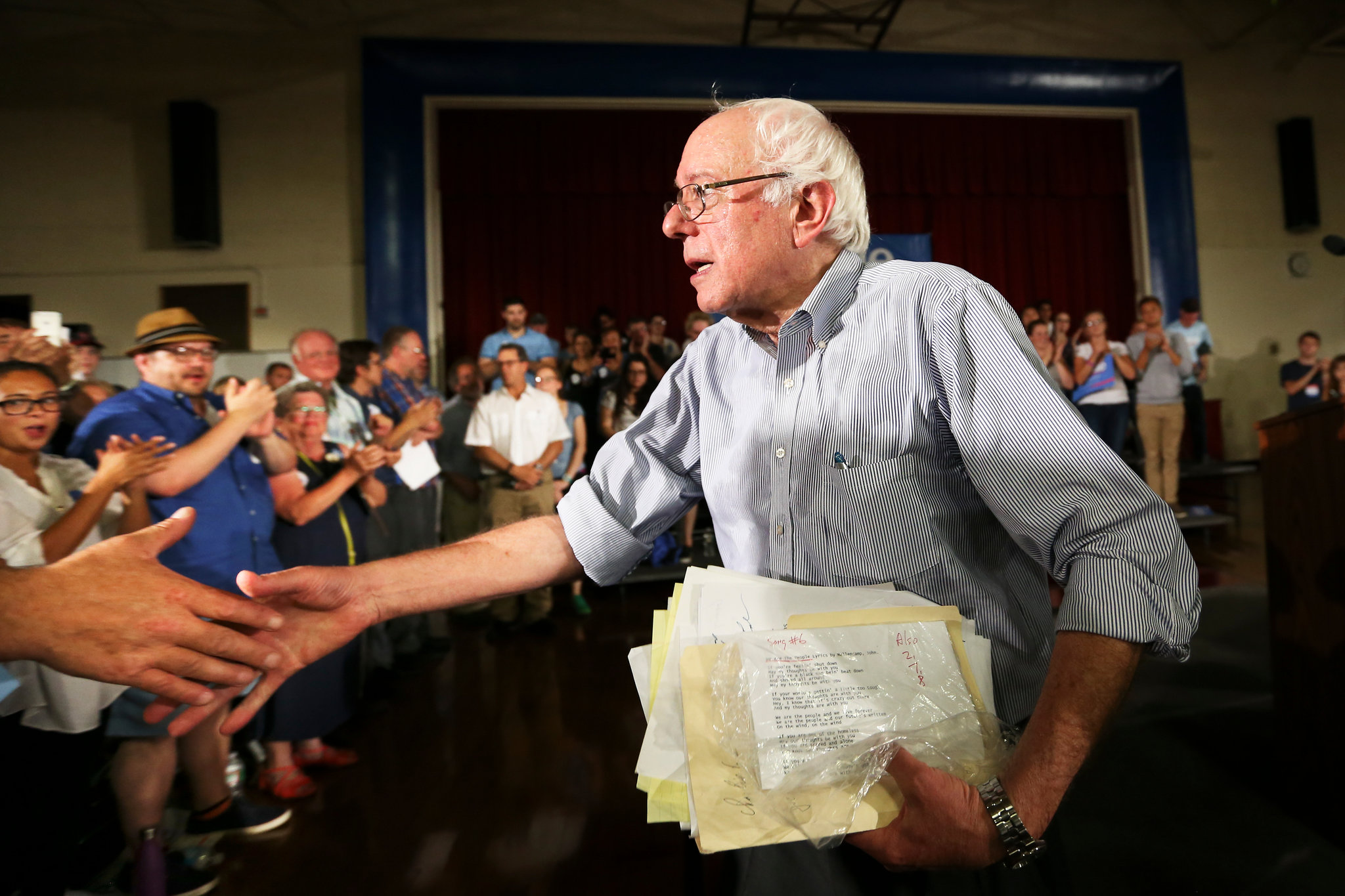
 Bernie Sanders at a town hall in Manchester, N.H. on Saturday. (Dominick Reuter/Reuters)
Bernie Sanders at a town hall in Manchester, N.H. on Saturday. (Dominick Reuter/Reuters)

By Harold Meyerson

Bernie Sanders has been getting a bum rap from people who purport to be his fellow progressives. He’s been chastised for not supporting open borders: Totally open immigration, the Vermont senator told Vox’s Ezra Klein, was “a Koch brothers proposal” that would erode the “concept of the nation state.” He’s been accused of downplaying the effects of racism by emphasizing the effects of classism — a more valid criticism to which Sanders, after his initial, grumpy response to protesters last month, has responded more recently by highlighting the racism of many police practices. Some critics have added that Sanders’s allegedly blinkered vision stems from his decades in nearly all-white Vermont, or from his admiration for the social democracies of nearly all-white Scandinavia, or from the purported racial blindness of social democracy itself.

To fault Sanders for failing to support open borders, however, is to hold him to a standard that no present-day elected official in any nation I know of has met. Like his fellow liberals and, polling shows, most Americans, Sanders supports offering citizenship to those immigrants, documented and not (excepting those who’ve committed serious crimes), who are already here, and stopping the efforts to deport them. Like most Americans, Sanders clearly supports the continuation of legal immigration.

Read more at The Washington Post