George W. Bush to Raise Money for Group That Converts Jews to Bring About Second Coming of Christ

Update (11/8/13): After this story published, the Messianic Jewish Bible Institute removed references to George W. Bush’s scheduled appearance from its website. But Freddy Ford, a spokesman for the former president, told Mother Jones on Friday afternoon that Bush’s plans “haven’t changed,” and he will appear at the event.

Update (11/8/13): After this story published, the Messianic Jewish Bible Institute removed references to George W. Bush’s scheduled appearance from its website. But Freddy Ford, a spokesman for the former president, told Mother Jones on Friday afternoon that Bush’s plans “haven’t changed,” and he will appear at the event.

Next week, former President George W. Bush is scheduled to keynote a fundraiser in Irving, Texas, for the Messianic Jewish Bible Institute, a group that trains people in the United States, Israel, and around the world to convince Jews to accept Jesus as the Messiah. The organization’s goal: to “restore” Israel and the Jews and bring about about the second coming of Christ.

Messianic Jews have long been controversial for Jews of all major denominations, who object to their proselytizing efforts and their message that salvation by Jesus is consistent with Jewish theology. Last year, Abraham Foxman, president of the Anti-Defamation League, told Politico that former Sen. Rick Santorum’s appearance at an event hosted by another Messianic Jewish organization, the Messianic Jewish Alliance of America, was “insensitive and offensive.” And Commentary magazine, which bills itself as a “conservative American journal of politics, Judaism, social and cultural issues,” noted, “it must be understood that the visceral distaste that the overwhelming majority of Jews have for the Messianics is not to be taken lightly.” Many Messianic Jews are Christians who have adopted aspects of Jewish ritual observance; others are Jews who share the Christian belief that Jesus is the Messiah.

Read more at Mother Jones

Bearing Witness To Nazis’ Life-Shattering Kristallnacht

View of a destroyed Jewish shop in Berlin on Nov. 11, 1938, after the anti-Semitic violence of Kristallnacht. The pogrom unleashed Nazi-coordinated attacks on thousands of synagogues and Jewish businesses.

On a busy street in Berlin’s shabby-chic district of Kreuzberg, the gray and dirty pavement glistens with little brass cobblestones. Millions of these stones are embedded in sidewalks all over Europe. They commemorate the last address the city’s Jewish residents called home before the war.

Etched into each stone is the name of an individual, a date of deportation, the name of a concentration camp and, more often than not, a date of death.

But some stones are inscribed with the word ueberlebt, meaning “survived.” The name on one such stone is Margot Bendheim, the maiden name of Margot Friedlander. For the past three years, this stone is no longer a valid record of her most recent Berlin address — which lies across town.

“As a survivor, I feel that I do something for the people who cannot speak for themselves anymore,” says Friedlander, who just turned 92.

After 64 years of exile in New York, Friedlander made the decision to return to her native Berlin for good. City officials welcomed her with open arms, and Friedlander was promptly given back her German citizenship.

“When I received my German citizenship, I said: ‘You expect me to say thank you for it? I will not do it. Because you only give me back what you took away from me,'” she says.

Read more at NPR: National Public Radio

Drone Strikes and the U.S.-Pakistan Relationship

The death of Pakistan Taliban leader Hakimullah Mehsud in a drone attack on November 1 is a dramatic reminder that US President Barack Obama remains determined to use drones to disrupt, dismantle and defeat al-Qaeda and its allies in Pakistan despite all the criticism his policy has generated. It works.

The reaction inside Pakistan is a revealing insight into the struggle under way in the country between those who want to fight terror and those who want to appease it. The US’s already dysfunctional relationship with Pakistan has taken another hit as well.

According to one count, the US has used the drones in 378 lethal strikes since 2004. Obama has ordered 327 of them in the four and half years he has been in the Oval Office. According to Pakistan’s Defence Ministry, these have killed 2,160 terrorists and only 67 civilians. These have been remarkably effective in putting al-Qaeda in Pakistan on the defensive.

The Wanted Man

Mehsud worked closely with al-Qaeda in December 2009 to use a Jordanian al-Qaeda triple agent, Humam Khalil al Balawi, to get into a CIA forward operating base on the Afghanistan-Pakistan border. Balawi blew himself up, killing seven CIA officers, two women and five men, as well as a Jordanian intelligence officer. It was one of the worst days in the agency’s history. Mehsud appeared sitting with Balawi in a martyrdom video released by the Taliban after the attack.

Mehsud was also involved in a plot to attack Time Square in New York City in May 2010 using a car bomb. A Pakistani American, Faysal Shahzad, was trained by Mehsud and al-Qaeda to build the bomb. Another video was released with Mehsud and Shahzad.

Fortunately, an alert hotdog vendor, a Muslim, spotted the vehicle emitting smoke and alerted the NYPD before it exploded. The NYPD later told me that had it gone off as planned, the results would have been catastrophic.

But most of Mehsud’s victims in his violent life were not Americans; by far the majority were his fellow Pakistanis. The Pakistan Taliban has murdered thousands of innocent Pakistanis in the last decade. It has fought a bitter and dangerous war against the Pakistani state and army. Its terror has helped to turn Karachi into a lawless mega city. It tried to murder young Malala Yousafzai and has warned it will kill her if she ever returns to Pakistan. Dozens of other young Pakistani children have been murdered by Mehsud’s followers.

Read more at The Brookings Institution

Drone Victims Testify Before Congress

Rafique ur Rehman and his family testify in a congressional briefing, October 30, 2013.

Zubair ur Rehman is afraid of blue skies. After all, it was a bright, clear day when his grandmother, Mamana Bibi was killed by a drone strike in a field outside of his home in Pakistan’s Waziristan region.

“When the sky brightens and becomes blue, the drones return and so does the fear,” the thirteen-year-old told members of Congress at a briefing organized by Representative Alan Grayson, a Florida Democrat, yesterday.

Zubair wasn’t always so anxious. Not even on that day when he was out collecting okra with his grandmother, siblings, and cousins in preparation for the Eid holiday.

“As I helped my grandmother work in the fields,” he said through a translator, “I could hear the drone hover overhead, but I didn’t worry. Why would I worry? Neither I nor my grandmother were militants.”

That is why it was so surprising when a hellfire missile fell from the sky and shattered his family’s life. Zubair’s sister, Nabila, nine years old, recalled what happened next. “I was very scared and all I could think of doing was just run. I kept running but I felt something in my hand. I looked at my hand and I saw that there was blood. I tried to bandage my hand but the blood kept coming. The blood wouldn’t stop.”

The two were badly injured along with four of their cousins. Their grandmother did not survive the attack.

Read more at the Boston Review

Where Does Facebook Stop and the NSA Begin?

Illustration: Dale Stephanos

“That social norm is just something that has evolved over time” is how Mark Zuckerberg justified hijacking your privacy in 2010, after Facebook imperiously reset everyone’s default settings to “public.” “People have really gotten comfortable sharing more information and different kinds.” Riiight. Little did we know that by that time, Facebook (along with Google, Microsoft, etc.) was already collaborating with the National Security Agency’s PRISM program that swept up personal data on vast numbers of internet users.

In light of what we know now, Zuckerberg’s high-hat act has a bit of a creepy feel, like that guy who told you he was a documentary photographer, but turned out to be a Peeping Tom. But perhaps we shouldn’t be surprised: At the core of Facebook’s business model is the notion that our personal information is not, well, ours. And much like the NSA, no matter how often it’s told to stop using data in ways we didn’t authorize, it just won’t quit. Not long after Zuckerberg’s “evolving norm” dodge, Facebook had to promise the feds it would stop doing things like putting your picture in ads targeted at your “friends”; that promise lasted only until this past summer, when it suddenly “clarified” its right to do with your (and your kids’) photos whatever it sees fit. And just this week, Facebook analytics chief Ken Rudin told the Wall Street Journal that the company is experimenting with new ways to suck up your data, such as “how long a user’s cursor hovers over a certain part of its website, or whether a user’s newsfeed is visible at a given moment on the screen of his or her mobile phone.”

There will be a lot of talk in coming months about the government surveillance golem assembled in the shadows of the internet. Good. But what about the pervasive claim the private sector has staked to our digital lives, from where we (and our phones) spend the night to how often we text our spouse or swipe our Visa at the liquor store? It’s not a stretch to say that there’s a corporate spy operation equal to the NSA—indeed, sometimes it’s hard to tell the difference.

Read more at Mother Jones

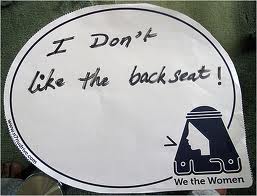
Why Saudi Arabia can’t ban women from driving forever

There’s something extraordinary happening in Saudi Arabia right now. I should know — you see, I was born there, lived there half my life, speak the language and understand the customs. Lately, I’m both amazed at and humbled by what I’m seeing: Extremely brave Saudi women, more driven than ever to change their society, despite the sad fact that they still aren’t allowed to drive.

And while it’s true there’s no formal law that bans females from getting behind the wheel in the ultra-conservative kingdom, it is also by no means a stretch to say they are, indeed, prohibited from doing so. Unfortunately, that’s just the way it’s always been in a society where religious edicts are often interpreted to mean it is illegal for women to drive.

I’ve reported on this subject for years and must admit, it’s a personal one for me. Some of my earliest memories entail trying to figure out why my American mother would always drive me around Oklahoma City, where we spent our summers, but could never take me around Jeddah, where we lived the rest of the year.

Read more at Ya Libnan

About Ya Libnan

Ya Libnan was originally created to capture the historic events that erupted as a result of the assassination of the former Prime Minister Rafic Hariri. The tragic Valentines Day murder gave birth to the Cedar Revolution.

In what started out as a personal log of events in Lebanon, we were pleasantly surprised by the overwhelming support for Ya Libnan. With our staff and a network of volunteers, we are proud of what we’ve accomplished. Ya Libnan offers our worldwide audience the latest independent news coverage which focuses exclusively on Lebanon.

Read more about Ya Libnan

How democratic is Turkey?

Ceylan Ozbudak

“The whole dream of democracy is to raise the proletarian to the level of bourgeois stupidity” Gustave Flaubert complained in his letter to George Sand in 1871. In the 1800s, democracy could be described in such simple terms. But as time progressed, so did the demands and perceptions. Today, talking about democracy demands more than providing every citizen the power to vote.

This week Turkey welcomed the news to be invited to join the Development Assistance Committee (DAC ), known as the “club of rich countries.” Erik Solheim, the newly elected chair of the OECD, stated that the Turkish aid provided to Africa and to Somalia in particular drew their attention and demonstrates the significant progress Turkey has made. According to OECD DAC figures, the total amount of Turkey’s official development aid in 2012 was $2.5 billion, a 99 percent increase in 10 years. In 2002, Turkey’s aid totaled $86 million and $1.3 billion in 2011—the assistance provided by other OECD member countries decreased 4 percent in 2012.

No democratic tradition

Positive story so far. But (and there is a but) I have to say Turkey still doesn’t have its own identity in democracy, nor does it have a democratic tradition. As we progress in general terms, in terms of finesse in democratic culture we are being more aware of our gaps every day. Of course steps are being taken to fully amend the constitution and make a more pluralistic, more peaceful society. Turkey’s constitutional problem possess a major challenge to democratic consolidation, however, in the latest democratization package, there were regulations for many ethnic and religious groups, especially for Kurdish people such as the right to education in different languages at special schools, lifting of the legal barriers for the use of Kurdish town names and permission to advertise in different languages and dialects.

One thing our politicians fail to consider is: perception is the only reality in politics – as our former Foreign Minister Yaşar Yakış so eloquently stated. If you look like an Islamist and talk like an Islamist, you will be known as one no matter how many freedoms you provide to your society. Passing an alcohol restriction fully in line with EU countries does not make AK Party an Islamist party but letting bigoted scholars talk about the indecency of pregnant women walking on the streets, does. Letting hijab wearing women go to universities and enter governmental institutions does not make AK Party an Islamist party, but criticizing a host on tv for her revealing clothes, certainly does. In terms of legislation, there is no gender segregation in Turkey, only positive one towards women. But if a society can still comment on women’s clothing and not men’s, how much equality of genders can we talk about in a society? If the dissents can find one leak in civil liberties, doesn’t it justify all other criticism? Still to this day neither the party nor the person who publicly criticized the ladies outfit apologized.

Read more at Al Arabiya

Thousands rally in Israel to remember slain PM Rabin

The demonstrators carried portraits of Rabin – who was assassinated after addressing a rally in the same square on November 4, 1995 – and banners with slogans against racism and intolerance. (AFP)

Tens of thousands of Israelis gathered in Tel Aviv on Saturday to mourn peace-seeking Prime Minister Yitzhak Rabin on the 18th anniversary of his assassination by a Jewish extremist.

The demonstrators were mainly young people representing a wide political spectrum but protesting against Israeli radicals opposed to peace with the Palestinians, an AFP reporter said.

The demonstrators carried portraits of Rabin – who was assassinated after addressing a rally in the same square on November 4, 1995 – and banners with slogans against racism and intolerance.

Read more at Al Arabiya

Exploiting Egypt’s Rape Culture for Political Gain | The Nation

In Egypt, as well as in the West, outrage over rampant sexual assault has too often been about political agendas rather than concern for the actual victims.

Women shout slogans against Egyptian President Mohamed Morsi and members of the Muslim Brotherhood during a march against sexual harassment and violence against women in Cairo February 6, 2013. (Reuters/Amr Abdallah Dalsh)

by Anna Lekas Miller August 8, 2013

Since the most recent wave of protests began in Tahrir Square on June 30, there have been 186 recorded sexual assaults—including eighty the night that former President Mohamed Morsi was overthrown. Many of these attacks are mob-style sexual assaults, often involving between fifty and 100 assailants, in which a woman is surrounded, stripped, groped and in some cases beaten and gang-raped until she needs medical attention. And in some recent cases, women were attacked and penetrated with knives and other weapons.

In Egypt, they call this the “Circle of Hell.”

Since the Egyptian Revolution began more than two and a half years ago, hundreds of thousands of women have been sexually assaulted in Tahrir Square. And over the past two and a half years, not a single assailant of the thousands who participated in hundreds of attacks has been prosecuted.

“These men attack women because they know they can get away with it,” said Yasmine, an Egyptian activist who doesn’t wish to give her last name.

Many of the women surveyed agree that sexual violence has gotten worse since former President Hosni Mubarak was overthrown. Up until the most recent wave of protests, during which the Muslim Brotherhood pointed to sexual assaults in Tahrir Square in an attempt delegitimize anti-government opposition, the rampant attacks that happened under President Morsi’s leadership have gone largely ignored.

According to a recent survey from UN Women, 99.3 percent of all Egyptian women report being sexually harassed, and 91.5 percent have experienced unwelcome physical contact. The country has three laws in the penal code that address sexual harassment, assault and rape—and though the punishments range from fines to imprisonment, including life sentences and the death penalty, these laws are rarely enforced. Instead, most women are discouraged from reporting their sexual assaults to the authorities. For most, the high risk of shame and humiliation in publicly outing oneself as a sexual assault survivor—and the assumption that one is tainted or, if unmarried, now unfit for marriage—far exceeds the likelihood that the assailant will be held accountable.

Like in the West, women’s attire is often blamed for attacks, particularly Western-style clothing that many conservative Egyptians claim attracts assailants and in some cases even justifies rape. According to a 2008 survey with the Egyptian Center for Women’s Rights, 53 percent of all men believe that a woman invites harassment through what she is wearing. Many of the women surveyed agree.

Despite these stereotypes, a woman’s clothing doesn’t have much bearing on the likelihood of an attack. One of the most famous photographs of the recorded history of Egypt’s sexual assault epidemic is of a woman sprawled on the floor in only her blue bra, her traditional niqab veil ripped and shredded next to her after her attack.

Read more @ The Nation

Saudi women emerging

published 1-20-2013

A week ago, Saudi Arabia saw something that people in the kingdom often talk about but rarely witness — a potentially important political reform.

King Abdullah announced Jan. 11 that 30 women would join the kingdom’s Shura Council, a consultative body of 150 persons, and that women henceforth would hold 20 percent of the seats. Skeptics cautioned that it’s a symbolic move, since this is an advisory group that doesn’t actually enact any legislation. But it’s a powerful symbol, according to men and women here.

When Abdullah first signaled his plan to name women to the council, a Saudi cleric said it would be “haram,” or forbidden under Islam. The king went ahead and announced the 30 appointees, saying that he had consulted the Senior Ulema Council, the religious body whose approval is one of the pillars of the Saudi monarchy.

A Westerner here told me that, last weekend, several dozen conservative Saudis gathered near Abdullah’s palace to complain, but he wouldn’t see them.

It’s understandable why conservatives would be upset: If Saudi women are deemed worthy of joining the body that advises the king on sensitive matters, it’s harder to justify the many limits on their rights.

I met here last week with Hayat Sindi, a scientist who is one of the newly appointed Shura members. She took her doctorate in biotechnology from Cambridge in 2001, and in the years since she has been a visiting scholar at Harvard, launched two companies and helped run a third.

“I feel the solution for the Middle East is based on women and youth,” she says. Listening to her story of insistent, determined accomplishment, it’s hard to disagree.

Read more at Ya Libnan.