Bernie Sanders Declares War

“Bernie Sanders just declared war on the Democratic establishment”
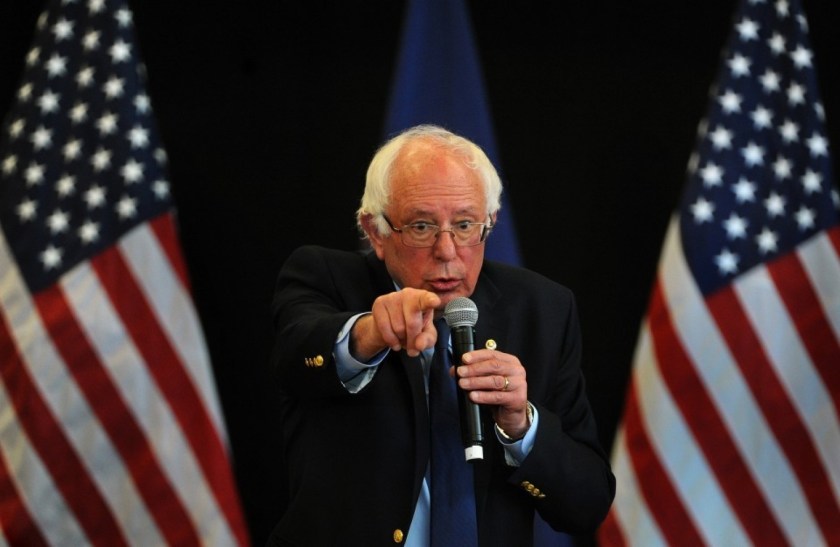
Presidential candidate Bernie Sanders Photo credit: Michael S. Williamson/The Washington Post
Presidential candidate Bernie Sanders
Photo credit: Michael S. Williamson/The Washington Post

By Chris Cillizza

If you want to make a politician really, really angry, endorse their primary opponent. That’s exactly what Bernie Sanders did Saturday to Democratic National Committee Chairwoman Debbie Wasserman Schultz.

“Clearly, I favor her opponent,” Sanders said in an interview with CNN’s Jake Tapper set to air today. “His views are much closer to mine than as to Wasserman Schultz’s. Let me also say this, in all due respect to the current chairperson: If [I am] elected president, she would not be reappointed chairwoman of the DNC.”

That puts Sanders on the side of Tim Canova, a former Capitol Hill staffer who has enjoyed considerable fundraising success — he’s raised more than $1 million — thanks to an anti-establishment message in his primary challenge to Wasserman Schultz.

And it ensures that the nastiness between Sanders and his supporters and Wasserman Schultz and the mainstream Democrats she represents will now surge into a full-blown battle.

You can be certain that Wasserman Schultz has spent the past 12 hours making sure that every one of her colleagues is aware of what Sanders has done. If he is willing to do this to me, don’t fool yourself into thinking he won’t do it to you too, she’ll argue. Yes, that’s a fundraising ploy. But, it also speaks to the very real threat that a free radical like Sanders presents to the established order.

That’s exactly how Sanders likes it. His brand is shaking up the establishment — just as he has done in the presidential race against Hillary Clinton. His supporters will love that he is willing to put some political capital on the line against Wasserman Schultz, who many of them believe is rigging the race for Clinton behind the scenes.

The Washington Post

The Case for Bernie Sanders Running as an Independent, If Clinton Is the Nominee

Presidential Candidate Bernie Sanders Holds Election Night Event
Senator Bernie Sanders, an independent from Vermont and 2016 Democratic presidential candidate, speaks during a campaign event in Huntington, West Virginia, U.S., on Tuesday, April 26, 2016. Sanders’ single win in Rhode Island out of the five contests held on Tuesday puts his opponent Hillary Clinton on the brink of the Democratic presidential nomination. Photographer: Ty Wright/Bloomberg via Getty Images

By H.A. Goodman

For the record, I still believe Bernie Sanders will become president, especially since the FBI is conducting a criminal investigation into Hillary Clinton’s emails and server. According to The Daily Banter recently, “She almost certainly isn’t going to be indicted.” This is about as reassuring as phrases like “It’s highly unlikely you won’t die from this medication,” and “Don’t worry, the brakes on your car have an 85% chance of working.” In reality, what loyal supporters of Hillary Clinton fail to realize is that even best case scenarios (she doesn’t get indicted, but the FBI confirms Obama’s assertion that she was “careless”), will only hurt Clinton’s already low national favorability ratings. Six months before Election Day, she’s not far from Trump in terms of negative favorability ratings, and in some polls, Trump is seen as more trustworthy.

If the Democratic Party blatantly ignores the values and beliefs of millions, and then risks a mutiny from an independent campaign because of this hubris, then it’s the DNC that must acquiesce; not the voters against Clinton’s neoconservative appeal, or ties to Wall Street.

If you’re a Hillary supporter and fear the repercussions of a Trump presidency if Bernie runs as an independent, then switch to Bernie if he runs an independent campaign. This way, you’ll ensure that your candidate isn’t at risk of an ongoing FBI investigation, and you’ll ensure (since Bernie Sanders defeats Trump by a wider margin), that Trump will be defeated. Refusing to support Bernie’s independent run, would also be admitting that you don’t truly fear a Trump presidency; you just want to instill that fear into others.

From war to Wall Street, and flip flops on everything from the TPP to Keystone XL, a great many Bernie supporters will never support Clinton. On a national stage, Clinton has negative favorability ratings in every single national poll. Beyond the confines of the Democratic establishment, it’s a different ballgame. The DNC can’t limit debates with Trump, and believe me, Trump won’t watch his tone.

No, America isn’t a closed Democratic Primary.

Also, Sanders would easily beat Trump at his own game. Independent voters are the biggest partisan group in the United States, with around 43% of American voters identifying politically as independent.

With around 43% of American voters independent, 44.7% of independents favor Bernie Sanders, while 25.9% choose Trump, and only 8.6% side with Hillary Clinton.

The Huffington Post

Big Union Leaders Betray Sanders and Workers

 Democratic presidential candidate Senator Bernie Sanders waves as he marches with supporters in the Labor Day parade. (Photo: AP/Jim Cole)
Democratic presidential candidate Senator Bernie Sanders waves as he marches with supporters in the Labor Day parade. (Photo: AP/Jim Cole)

By Ralph Nader

Around a conference table inside the large Washington headquarters of the AFL-CIO, a furious exchange occurred between labor union presidents. It was late February and up for decision by the Executive Council was whether the country’s principal labor federation was going to make a primary season endorsement of Hillary Clinton as favored by the leaders of the largest unions.

According to insiders, tempers flared when smaller unions challenged the Hillary-endorsing big unions such as AFSCME (public employees), the American Federation of Teachers, the National Education Association, the Service Employees (SEIU) and the Food and Commercial Workers (UFCW). These large unions came out for Clinton in late 2015 and early 2016 before they sensed the growing rank and file workers’ preference for the lifetime advocate for workers and union backer, Bernie Sanders.

Listening to the nurses union head speak out for Sanders’ strong pro-labor history, Lee Saunders, president of AFSCME, interrupted her, exclaiming: “I will not allow you to do a commercial for Sanders.” She retorted, “You mean for the only candidate who has a 100% labor record?”

A union leader of postal workers charged the unions backing Hillary as being “completely out of touch with their workers.” AFL-CIO President Richard Trumka then cut off their microphones.

All over the country, the observation by the postal workers’ leader rings true. Even as Lee Saunders read the names of the Democratic presidential contenders at a large Washington state AFSCME membership meeting last October, “only Sanders’ name brought loud, sustained applause,” according to Bloomberg News.

Few union leaders allow a worker referendum to make the endorsement decisions. The 700,000-member Communications Workers of America (CWA) does, and the result was a “decisive endorsement of Sanders,” reported Rafael Navar, the union’s political director. Whether it is the level of enthusiasm, campaigning to get out the vote or talking up their candidate’s record on such issues as minimum wage increases, abolition of public university and college tuition, full Medicare for all (single payer system) and credibility in standing up to Wall Street, Hillary’s votes and statements do not come close to respecting the working families of America compared to Bernie’s consistent 30-year record.

Common Dreams

Bernie Sanders Will Make the Economy Great Again

Liberal critics like Paul Krugman argue that Sanders’s economic platform is unrealistic. They are dead wrong.

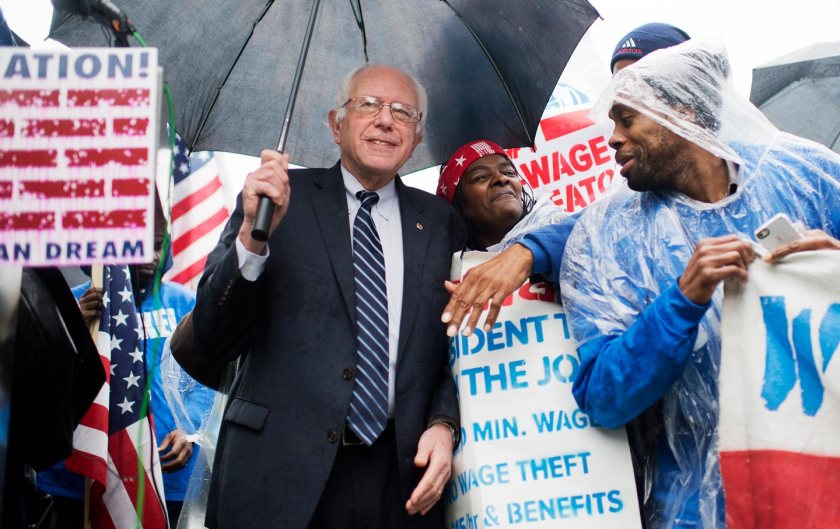
 Bernie Sanders attends a rally in Upper Senate Park with striking workers to call for a minimum wage of $15 per hour, November 10, 2015. (Tom Williams / CQ Roll Call via AP Images)
 Bernie Sanders attends a rally in Upper Senate Park with striking workers to call for a minimum wage of $15 per hour, November 10, 2015. (Tom Williams / CQ Roll Call via AP Images)

By Robert Pollin

Does Bernie Sanders’s economic program amount to pie-in-the-sky nonsense? The short answer is no. All of his major proposals are grounded in solid economic reasoning and evidence.

But that hasn’t stopped a major swath of leading liberal economists and commentators to insist otherwise. Paul Krugman has led these attacks from his New York Times perch, charging repeatedly that Sanders makes “outlandish economic claims,” embraces “deep voodoo” economics, is “not ready for prime time,” and so forth. A recent Washington Post article by columnist Steven Pearlstein cites several other liberal economists criticizing Sanders’s support for Scandinavian-style social democratic policies, concluding that his program “promises all the good parts of the Scandinavian model without any of the bad parts.”

Sanders’s economic agenda certainly represents a dramatic departure from what has come out of mainstream Democratic Party circles for a generation, to say nothing, of course, of the Republicans. The key elements of Sanders’s program include a “Medicare-for-all” single-payer healthcare system; an increase in the federal minimum wage from $7.25 to $15 an hour; free tuition at public colleges and universities, to be financed by taxing Wall Street transactions; opposition to trade agreements like the North American Free Trade Agreement (NAFTA) that have weakened the wage-bargaining power of US workers; large-scale public investments to build a clean-energy economy and rebuild the crumbling US infrastructure; and strong Wall Street regulations to promote productive investments and job creation over casino capitalism.

By contrast, the Democratic Party under Bill Clinton embraced an only moderately less aggressive pro-business agenda than the Republicans. Clintonomics featured Wall Street deregulation, NAFTA, and only tepid support for policies benefitting working people and the poor. This is how, over the full eight years of the Clinton presidency, average wages ended up being 2 percent lower than the average under Ronald Reagan and George H.W. Bush and nearly 10 percent less than under Jimmy Carter’s “years of malaise.”

The Nation

Why Mainstream Media Marginalizes Bernie Sanders

Robert Reich: Here’s why mainstream media marginalizes Bernie Sanders

Robert_Reich
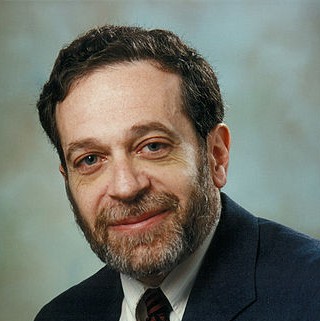
Former US Labor Secretary Robert Reich

“Bernie did well last weekend but he can’t possibly win the nomination,” a friend told me for what seemed like the thousandth time, attaching an article from the Washington Post that shows how far behind Bernie remains in delegates.

Wait a minute. Last Tuesday, Sanders won 78 percent of the vote in Idaho and 79 percent in Utah. This past Saturday, he took 82 percent of the vote in Alaska, 73 percent in Washington, and 70 percent in Hawaii.

In fact, since mid-March, Bernie has won six out of the seven Democratic primary contests with an average margin of victory of 40 points. Those victories have given him roughly a one hundred additional pledged delegates.

As of now, Hillary Clinton has 54.9 percent of the pledged delegates to Bernie Sanders’s 45.1 percent.That’s still a sizable gap – but it doesn’t make Bernie Sanders’s candidacy an impossibility.

Moreover, there are 22 states to go with nearly 45 percent of pledged delegates still up for grabs – and Sanders has positive momentum in almost all of them.

Hillary Clinton’s lead in superdelegates may vanish if Bernie gains a majority of pledged delegates.

Bernie is outpacing Hillary Clinton in fundraising. In March, he raised $39 million. In February, he raised $42 million (from 1.4 million contributions, averaging $30 each), compared to Hillary Clinton’s $30 million. In January he raised $20 million to her $15 million.

By any measure, the enthusiasm for Bernie is huge and keeps growing. He’s packing stadiums, young people are flocking to volunteer, support is rising among the middle-aged and boomers.

The 4 Things You Need to Know About Bernie Sanders’ Historic Comeback

Democratic presidential candidate Sen. Bernie Sanders, I-Vt., speaks at a rally Friday, March 25, 2016, in Seattle. (AP Photo/Elaine Thompson)

By Seth Abramson

Bernie Sanders will win more pledged delegates than Hillary Clinton in the second half of the Democratic nominating season.

In fact, he’ll almost certainly win more pledged delegates than Clinton in the final three and a half months of the primary season.

And virtually without question, he’ll win more states than Clinton in these final three and a half months — it’s just a matter of how many more.

He’ll also close out the primary season, it appears, beating Donald Trump by as much or (more often) substantially more than Clinton in nearly every national and battle-ground state poll taken.

Yet none of it is a surprise, even in the context of a race the media told us was essentially over a month ago.

In fact, everything that’s happening now in the Clinton-Sanders race was predicted, long ago, by either Sanders himself or the hard data of this election season. Moreover, none of what’s happening is a surprise to the politicos on the Clinton side, either; that’s one reason they’re working overtime to control and then shift the narrative from the inevitability of a major Sanders comeback. While it’s still up in the air whether that comeback will be total or near-total, only by manipulating the narrative can the Clinton campaign keep Sanders at bay.

And that’s why understanding that what’s happening now is no more or less than what was readily predictable a year ago is crucial to understanding the current state of the Democratic primary race. This means unpacking not just the Clinton camp’s transparent attempts to skew the media narrative, but also, and more importantly, the hard data behind a comeback that could end up being every bit as historic as Sanders supporters are now suggesting it will be.

The Huffington Post

Hillary Clinton’s Link to a Nasty Piece of Work in Honduras

Democratic presidential candidate Hillary Clinton speaks during a campaign event at Hillside High School in Durham, N.C., Thursday, March 10, 2016. (AP Photo/Carolyn Kaster)

By Marjorie Cohn

A critical difference between Bernie Sanders and Hillary Clinton is their position on whether children who fled violence in Central American countries, particularly Honduras, two years ago should be allowed to stay in the United States or be returned.

Sanders states unequivocally that they should be able to remain in the U.S.

Clinton disagrees. She would guarantee them “due process,” but nothing more.

By supporting the June 28, 2009, coup d’état in Honduras when she was secretary of state, Clinton helped create the dire conditions that caused many of these children to flee. And the assassination of legendary Honduran human rights leader Berta Cáceres earlier this month can be traced indirectly to Clinton’s policies.

During the Feb. 11 Democratic debate in Milwaukee, Clinton said that sending the children back would “send a message.” In answer to a question by debate moderator Judy Woodruff of PBS, she said, “Those children needed to be processed appropriately, but we also had to send a message to families and communities in Central America not to send their children on this dangerous journey in the hands of smugglers.”

Sanders retorted, “Who are you sending a message to? These are children who are leaving countries and neighborhoods where their lives are at stake. That was the fact. I don’t think we use them to send a message. I think we welcome them into this country and do the best we can to help them get their lives together.”

In the March 9 debate in Miami between the two Democratic candidates, Sanders accurately told moderator Jorge Ramos of Univision, “Honduras and that region of the world may be the most violent region in our hemisphere. Gang lords, vicious people torturing people, doing horrible things to families.” He added, “Children fled that part of the world to try, try, try, try, maybe, to meet up with their family members in this country, taking a route that was horrific, trying to start a new life.”

The violence in Honduras can be traced to a history of U.S. economic and political meddling, including Clinton’s support of the coup, according to American University professor Adrienne Pine, author of “Working Hard, Drinking Hard: On Violence and Survival in Honduras.”

Pine, who has worked for many years in Honduras, told Dennis Bernstein of KPFA radio in 2014 that the military forces that carried out the coup were trained at the Western Hemisphere Institute for Security Cooperation (formerly called the U.S. Army School of the Americas) in Fort Benning, Ga. Although the coup was supported by the United States, it was opposed by the United Nations and the Organization of American States (OAS). The U.N. and the OAS labeled President Manuel Zelaya’s ouster a military coup.

“Hillary Clinton was probably the most important actor in supporting the coup [against the democratically elected Zelaya] in Honduras,” Pine noted. It took the United States two months to even admit that Honduras had suffered a coup, and it never did admit it was a military coup. That is, most likely, because the Foreign Assistance Act prohibits the U.S. from aiding a country “whose duly elected head of government is deposed by military coup or decree.”

Truthdig

The American Fascist

(Photo: Matt Johnson/flickr/cc.)

By Robert Reich

I’ve been reluctant to use the “f” word to describe Donald Trump because it’s especially harsh, and it’s too often used carelessly.

But Trump has finally reached a point where parallels between his presidential campaign and the fascists of the first half of the 20th century – lurid figures such as Benito Mussolini, Joseph Stalin, Adolf Hitler, Oswald Mosley, and Francisco Franco – are too evident to overlook.

It’s not just that Trump recently quoted Mussolini (he now calls that tweet inadvertent) or that he’s begun inviting followers at his rallies to raise their right hands in a manner chillingly similar to the Nazi “Heil” solute (he dismisses such comparison as “ridiculous.”)

The parallels go deeper.

As did the early twentieth-century fascists, Trump is focusing his campaign on the angers of white working people who have been losing economic ground for years, and who are easy prey for demagogues seeking to build their own power by scapegoating others.

Trump’s incendiary verbal attacks on Mexican immigrants and Muslims – even his reluctance to distance himself from David Duke and the Ku Klux Klan – follow the older fascist script.

That older generation of fascists didn’t bother with policy prescriptions or logical argument, either. They presented themselves as strongmen whose personal power would remedy all ills.

They created around themselves cults of personality in which they took on the trappings of strength, confidence, and invulnerability – all of which served as substitutes for rational argument or thought.

Common Dreams

Who Is Really Blocking President Obama’s Supreme Court Nomination?

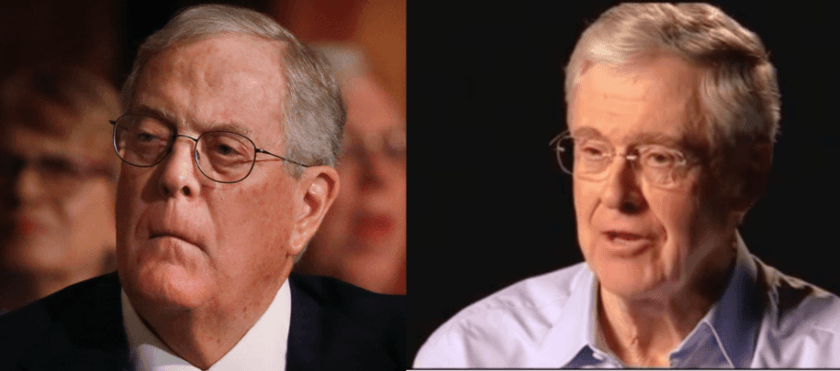
It's Charles and David Koch versus the rest of us.  Credit: Reuters
It’s Charles and David Koch versus the rest of us. Credit: Reuters

From The Media Have Forgotten Who Really Is Blocking President Obama’s Supreme Court Nomination

By Dartagnan in the Daily Kos

The media’s telescopic gaze following the death of Supreme Court Justice Scalia last week was, true to form, pointing in exactly the wrong direction. Scalia’s death prompted a breathless flood of pundit analysis focused on whether the Republican Party is violating Senate protocol or the Constitution itself by refusing to vote on the nomination of a new Supreme Court Justice in President Obama’s final year in office. Much chatter was devoted to rehashing the deliberate obstruction this president has had to cope with. While undoubtedly true, this misses the forest for the trees. It doesn’t matter so much what Republicans’ “excuse” is—or even whether it violates the clear intent of the Constitution—it does.

What really matters is why they’re doing it, and who it serves. The answer to that question leads straight to their donor base. Although it scarcely bears repeating, the Republican Senate and (to an even greater extent) the Republican House of Representatives now exists to serve the economic interests of a tiny group of very, very wealthy people, people who now stand to either gain or lose hundreds of millions, even billions of dollars spent complying with environmental, finance and labor laws and regulations, depending on who replaces Scalia. That is what this fight is all about. For the GOP and the billionaires who pull their strings, much ballyhooed rhetoric about abortion, affirmative action, union rights and voting rights are all subsidiary to this main event.

The two most prominent members of this tiny group of people are Charles and David Koch:

“In this election cycle… the Kochs have publicly stated that they and their compatriots will spend $889 million, more than either the Republican or Democratic parties spent last time around. According to a recent analysis in Politico, their privatized political network is backed by a group of several hundred extremely rich fellow donors who often meet at off-the-record conclaves organized by the Kochs at desert resorts. It has at least 1,200 full-time staffers in 107 offices nationwide, or three and a half times as many as the Republican National Committee. They may be the most important unelected political figures in American history.”

Read more at the Daily Kos

Why Brother Bernie Is Better for Black People Than Sister Hillary

Getty
Getty

By Dr. Cornell West

The future of American democracy depends on our response to the legacy of Martin Luther King, Jr. And that legacy is not just about defending civil rights; it’s also about fighting to fix our rigged economy, which yields grotesque wealth inequality; our narcissistic culture, which unleashes obscene greed; our market-driven media, which thrives on xenophobic entertainment; and our militaristic prowess, which promotes hawkish policies around the world. The fundamental aim of black voters—and any voters with a deep moral concern for our public interest and common good—should be to put a smile on Martin’s face from the grave.

The conventional wisdom holds that, in the Democratic primary, Hillary Clinton is the candidate who will win over African-American voters—that her rival, Bernie Sanders, performed well in Iowa and won New Hampshire on account of those states’ disproportionate whiteness, and that Clinton’s odds are better in the upcoming contests in South Carolina and Nevada, two highly diverse states.

But in fact, when it comes to advancing Dr. King’s legacy, a vote for Clinton not only falls far short of the mark; it prevents us from giving new life to King’s legacy. Instead, it is Sanders who has championed that legacy in word and in deed for 50 years. This election is not a mere campaign; it is a crusade to resurrect democracy—King-style—in our time. In 2016, Sanders is the one leading that crusade.

Clinton has touted the fact that, in 1962, she met King after seeing him speak, an experience she says allowed her to appreciate King’s “moral clarity.” Yet two years later, as a high schooler, Clinton campaigned vigorously for Barry Goldwater—a figure King called “morally indefensible” owing to his staunch opposition to the Civil Rights Act of 1964. And she attended the Republican convention in 1968! Meanwhile, at this same moment in history, Sanders was getting arrested for protesting segregation in Chicago and marching in Washington with none other than King itself. That’s real moral clarity.

Read more at Politico.com