US targets major drug cartel: Hezbollah – Ya Libnan

The Obama administration charged Hezbollah with operating like an international drug cartel and blacklisted two Lebanese money-exchange houses for allegedly moving tens of millions of dollars of drug profit through the U.S. financial system on behalf of the militant group.

The Treasury Department’s action Tuesday marked the latest salvo in a two-year U.S. government campaign against Hezbollah’s alleged drug-trafficking activities.

U.S. officials alleged that Hezbollah is using proceeds from this narcotics trade to fund international terrorist activities and to bolster the forces of Syrian President Bashar al-Assad in their fight against a widening political rebellion.

U.S. officials also said Hezbollah is increasingly reverting to illicit trade to offset diminished funding coming from Iran, the organization’s closest ally.

“Hezbollah is operating like a major drug cartel,” said Derek Maltz, a special agent for the Drug Enforcement Administration, who is overseeing the U.S. probe into Hezbollah. “These proceeds are funding violence against Americans.”

Bulgaria’s Interior Ministry concluded that Hezbollah operatives conducted last year’s bombing of a tourism bus at a Black Sea resort that killed five Israeli nationals. The European Union is considering imposing broadsanctions on Hezbollah as a result.

Read more at Ya Libnan.

This article is from the archives. I feel that it is worth republishing because it is of major historical importance and relevance to understanding current Middle East events. Broadly speaking, Hezbollah might be thought of as the Shi’ite equivalent of Sunni-based Al Qaeda. I know that’s a crude comparison. But in Syria, these two radical Islamist ideologies are principle players in a major, regional civil conflict that has resulted in the deaths of over 100,000 people.

Former minister killed in Beirut car bomb

Forensic experts check the site of explosion near a crater in Beirut, Friday, Dec. 27, 2013. (The Daily Star/Mohammad Azakir)

BEIRUT: Former Minister Mohammad Shatah, a senior aide to former Prime Minister Saad Hariri, was killed along with five other people in a car bomb blast in Downtown Beirut Friday, a security source said.

The March 14 coalition, which is headed by the Future Movement, pointed the finger of blame at the regime of Syria’s President Bashar Assad, which swiftly denied the allegations.

Shatah’s vehicle was making its way in the capital’s bustling central district at the time of the explosion, which also killed Mohammad Tareq Badr, the former finance minister’s bodyguard, the source said, adding that 70 people were also wounded in the blast that struck at around 9.45 a.m.

The 62-year-old, who was also a close aide to former Prime Minister Fouad Siniora, was headed to Hariri’s Downtown residence where a meeting of the March 14 coalition was under way.

His killing comes days before the U.N.-backed Special Tribunal for Lebanon begins the trial of four Hezbollah suspects over the 2005 assassination of Hariri’s father, former Prime Minister Rafik Hariri, the founder of the Future Movement.

Read more at The Daily Star-Lebanon

The Names of the Revolution


Posted by Matthew Barber on Saturday, December 14th, 2013

From the inception of the Syrian uprising, each Friday has been given a special title by activists involved in protests. Fridays were important in the beginning because more protests would occur on that day than any other day of the week. Protests would often take place immediately following communal prayers in mosques where large groups of people would have already congregated together, something impossible in Syria outside of institutionalized contexts like the mosque or a place of education.

Each Friday bore a name such as “The Day of Rage” or “The Day of Defiance” and such titles were picked up and circulated by both the Arab and Western media. The practice of naming the Fridays was started by the “Syrian Revolution 2011” Facebook page, run by Fida’ ad-Din Tariif as-Sayyid ‘Isa, a Syrian activist in Sweden.

Some months into the uprising in 2011, people complained and proposed that the process of naming the Fridays should be democratic rather than performed by a small group of website administrators. A new system emerged whereby a number of options for the next Friday’s name would be posted on the Revolution Facebook page, and visitors were able to vote for the title of their choosing. Each week, multiple thousands vote on these names.

The names have reflected themes that concern the uprising during the particular week that a name is assigned. Back when the uprising was still characterized by protests rather than skirmishes, activists would incorporate the current Friday’s name into the slogans and banners used in demonstrations.

At the beginning, names began as simple, one-word titles such as “The Day of Honor” that were general in scope. Then the names began to express specific ideas, like “The Day of Loyalty to the Kurdish Uprising,” or positions that could be endorsed, like “The Day of No to Peacekeeping Forces in The Land of Sham.” Eventually, names grew unwieldy in length and included statements, i.e. “The Day of Full Preparation for Full Mobilization; Russia is the Enemy of the Syrian People” or “The Day of Allah Is Great: He Supported his Worshipers, Made his Soldiers Mighty, and Defeated the Factions Alone” (an excerpt from a prayer recited on Eid). Some titles employed cleverness: “Revolution University – Martyrdom Engineering.”

We recently collected all of the names given to the Fridays since the beginning of the uprising and list them below with translations. December 9 marked the 1000th day of the revolution; all of the Friday names listed below except the final one (Dec. 13) constitute the first 1000 days of the revolution.

Read more at Syria Comment

Rare snowstorm near Syria-Lebanon border brings havoc, disrupts aid

A Syrian refugee shovels snow outside her tent in the makeshift refugee camp of Terbol near the Bekaa Valley town of Zahleh in eastern Lebanon on December 11, 2013.(AFP Photo / STR)

At least two people were killed and 14 injured as the first snowfall of the season hit Syria and Lebanon. High winds and freezing temperatures affected refugee camps and disrupted international aid. More severe weather is expected this winter.

The storm, named ‘Alexa,’ took the lives of two people and injured 14 others in Lebanon, Ya Libnan reported, citing Red Cross Secretary General George Kettaneh.

The winter storm caused transportation chaos in the region and grounded the UN humanitarian airlift, which was scheduled to bring food and supplies from Iraq to the northeastern Kurdish areas of Syria. Tens of thousands of people are isolated in those areas, waiting for the aid to arrive.

Read more at RT-Novosti

Rare Snow Storm Hits Jersusalem

A fierce winter storm is sweeping across the Middle East

Snow-covered cars are parked on a street in central Jerusalem, Dec. 13, 2013.

Jerusalem and parts of the West Bank was enduring a rare snowstorm sweeping across the Middle East on Friday. At least 20 inches had fallen since Thursday, Reuters reports.

“In my 54 years I don’t remember a sight like this, such an amount I cannot recall,” Jerusalem Mayor Nir Barkat said.

The storm has tested Israeli rescue services, with more than 1,000 people were stranded overnight because of the heavy snow fall. The military helped police rescue hundreds of people stuck in vehicles on highways near the capital, Reuters reports.

It was also reportedly snowing heavily in Cairo.

The United Nations and other aid agencies have warned that thousands of Syrian refugees living in vulnerable conditions in Lebanon are at risk from the heavy snow and freezing rain that have hit the region this week, the Guardian reports.

Read more at TIME

Assad’s Poison Pill

Initially perceived as President Bashar Assad’s worst blunder in Syria’s civil war, the use of chemical weapons by his army last summer increasingly looks like his ticket to military victory and the key to his political survival.

As a small U.N.-affiliated group of chemical weapons experts toils to maintain a tight schedule mandated by the Security Council for the destruction of Syria’s chemical arms, Western diplomats and the United Nations are hard at work organizing a conference in Geneva in an attempt to end the carnage.

But critics say that it could actually help Assad win the nearly three-year war, even as he stands accused by a top U.N. official of complicity in war crimes.

Damascus says its aim in attending the proposed Geneva conference is to maintain the Assad family’s 40-year hold on power. And as observers believe that the military situation now favors the Assad government, he could also seal a diplomatic victory by leveraging his cooperation with the Organization for the Prohibition of Chemical Weapons (OPCW) team.

“Assad will continue to cooperate with the OPCW,” said a Western diplomat who closely follows Syria. “He has the know-how, so he can renew the chemical program in the future if he wants it. But for now, as long as he cooperates with the chemical team, everybody has an interest in keeping him in power,” the diplomat added, asking for anonymity so he could speak freely.

Read more at Newsweek

In first, Syrian woman gives birth in Israeli hospital

Lazar Berman

For the first time, a Syrian refugee gave birth in an Israeli hospital on Sunday. The woman, a 20-year-old nurse, came across the border alone, and gave birth to a healthy 3.2-kilogram (7 pound) boy.

When the woman felt the baby coming, she was stuck in her home near Quneitra, with no access to a Syrian hospital and no medical care in the town. So she decided to take a huge risk for the sake of her unborn child, and made her way to the border.

“I feared for the baby’s welfare if the birth went through complications at home,” she said. “To my joy, the Israeli army saw I was suffering from terrible pains, and picked me up and transferred me to the hospital.”

When the IDF found her on the border Saturday night, she was already in labor. They brought her to Ziv Medical Center in Safed, where many of the dozens of Syrian medical cases brought into Israel are treated.

Since she came across the border with no family, midwives at the hospital took their place, holding her hands and coaching her through the birth. “At the end of the birth she thanked everyone and hugged everyone with joy,” one of the nurses said.

“The team of Israeli midwives and doctors treated me with sensitivity and respect,” noted the mother.

“She received warm and embracing care from the entire birthing staff,” said Mira Eli, a nurse in the birthing room at Ziv, “just like every mother needs — and even more.”

Read more at The Times Of Israel

Cut Off: Starving Syrians Hope to Live Through Winter

A young boy sits alone in a rubble-filled street in the Harasta area of Damascus. What the chemical weapons failed to achieve is now being gradually accomplished by hunger: the annihilation of a city.

As the world focuses on Syria’s chemical disarmament, thousands of people in the country face a more pressing concern: starvation. Cut off by ongoing violence, they are dying because they have no access to supplies. Many will not survive the winter.

Three-year-old Ibrahim Khalil survived the chemical weapons attacks on Aug. 21. But then, 10 days later, he died of hunger — just as the next child died hours after him and a third died four days later in the Damascus suburb of Muadhamiya.

When the world learned of the sarin gas attacks that took place in the suburbs of Damascus this past summer, it reacted with outrage, leading to Syria’s dismantling of its chemical arsenal, which was declared complete by the Organization for the Prohibition of Chemical Weapons on Thursday. Yet hardly anyone seems to be taking notice of these new deaths. After being under siege for months, cut off from food supplies, electricity, water and any form of aid, people are beginning to die of malnutrition.

Children are also starving to death in Yarmouk in the southern part of Damascus and other places sealed off by government troops. But nowhere is the situation as fatal as it is in Muadhamiya, where six children had died by mid-October “and dozens are already so weak that an ordinary cold would kill them,” says Dr. Amin Abu Ammar, one of the last doctors in the suburb.

The fact that President Bashar Assad agreed to destroy his stockpiles of chemical weapons is a piece of good news from a war that is not producing any other positive reports. In fact, it’s too good, so good that the chemical weapons inspectors were promptly awarded the Nobel Peace Prize, and it seemed as if the rest of the war had ceased. And while European governments are mainly concerned about foreign jihadists infiltrating Syria, there are about 1,000 armed local fighters in Muadhamiya who don’t even have any contact with neighboring towns.

Read more at Der Spiegel

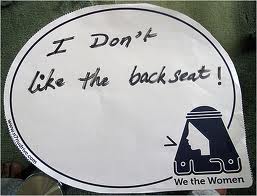
Why Saudi Arabia can’t ban women from driving forever

There’s something extraordinary happening in Saudi Arabia right now. I should know — you see, I was born there, lived there half my life, speak the language and understand the customs. Lately, I’m both amazed at and humbled by what I’m seeing: Extremely brave Saudi women, more driven than ever to change their society, despite the sad fact that they still aren’t allowed to drive.

And while it’s true there’s no formal law that bans females from getting behind the wheel in the ultra-conservative kingdom, it is also by no means a stretch to say they are, indeed, prohibited from doing so. Unfortunately, that’s just the way it’s always been in a society where religious edicts are often interpreted to mean it is illegal for women to drive.

I’ve reported on this subject for years and must admit, it’s a personal one for me. Some of my earliest memories entail trying to figure out why my American mother would always drive me around Oklahoma City, where we spent our summers, but could never take me around Jeddah, where we lived the rest of the year.

Read more at Ya Libnan

About Ya Libnan

Ya Libnan was originally created to capture the historic events that erupted as a result of the assassination of the former Prime Minister Rafic Hariri. The tragic Valentines Day murder gave birth to the Cedar Revolution.

In what started out as a personal log of events in Lebanon, we were pleasantly surprised by the overwhelming support for Ya Libnan. With our staff and a network of volunteers, we are proud of what we’ve accomplished. Ya Libnan offers our worldwide audience the latest independent news coverage which focuses exclusively on Lebanon.

Read more about Ya Libnan

Saudis Shock U.N., Quit Security Council Over Syria

Saudi Arabia took the extraordinary step Friday of refusing to take its seat on the U.N. Security Council — despite pursuing the position for years. It’s an unprecedented protest over the council’s failure to take firmer action in Syria and Palestine. And it comes at a time of growing Saudi frustration with American-led policies across the Middle East.

The decision, which came in an announcement from the Saudi Foreign Ministry, came one day after Saudi Arabia was elected for the first time in its history to the United Nations’ most powerful body. And it reflected deep resentment over China and Russia’s blockage of steps by the Security Council to restrain President Bashar al-Assad’s military and to force him from power. The announcement left many regional specialists shaking their heads, saying the move may run counter to Saudi interests and would deny the Saudis an opportunity to use the high-profile position on the council to promote a tougher line on Syria and other issues.

Read more at Foreign Policy