Drone Strikes and the U.S.-Pakistan Relationship

The death of Pakistan Taliban leader Hakimullah Mehsud in a drone attack on November 1 is a dramatic reminder that US President Barack Obama remains determined to use drones to disrupt, dismantle and defeat al-Qaeda and its allies in Pakistan despite all the criticism his policy has generated. It works.

The reaction inside Pakistan is a revealing insight into the struggle under way in the country between those who want to fight terror and those who want to appease it. The US’s already dysfunctional relationship with Pakistan has taken another hit as well.

According to one count, the US has used the drones in 378 lethal strikes since 2004. Obama has ordered 327 of them in the four and half years he has been in the Oval Office. According to Pakistan’s Defence Ministry, these have killed 2,160 terrorists and only 67 civilians. These have been remarkably effective in putting al-Qaeda in Pakistan on the defensive.

The Wanted Man

Mehsud worked closely with al-Qaeda in December 2009 to use a Jordanian al-Qaeda triple agent, Humam Khalil al Balawi, to get into a CIA forward operating base on the Afghanistan-Pakistan border. Balawi blew himself up, killing seven CIA officers, two women and five men, as well as a Jordanian intelligence officer. It was one of the worst days in the agency’s history. Mehsud appeared sitting with Balawi in a martyrdom video released by the Taliban after the attack.

Mehsud was also involved in a plot to attack Time Square in New York City in May 2010 using a car bomb. A Pakistani American, Faysal Shahzad, was trained by Mehsud and al-Qaeda to build the bomb. Another video was released with Mehsud and Shahzad.

Fortunately, an alert hotdog vendor, a Muslim, spotted the vehicle emitting smoke and alerted the NYPD before it exploded. The NYPD later told me that had it gone off as planned, the results would have been catastrophic.

But most of Mehsud’s victims in his violent life were not Americans; by far the majority were his fellow Pakistanis. The Pakistan Taliban has murdered thousands of innocent Pakistanis in the last decade. It has fought a bitter and dangerous war against the Pakistani state and army. Its terror has helped to turn Karachi into a lawless mega city. It tried to murder young Malala Yousafzai and has warned it will kill her if she ever returns to Pakistan. Dozens of other young Pakistani children have been murdered by Mehsud’s followers.

Read more at The Brookings Institution

Drone Victims Testify Before Congress

Rafique ur Rehman and his family testify in a congressional briefing, October 30, 2013.

Zubair ur Rehman is afraid of blue skies. After all, it was a bright, clear day when his grandmother, Mamana Bibi was killed by a drone strike in a field outside of his home in Pakistan’s Waziristan region.

“When the sky brightens and becomes blue, the drones return and so does the fear,” the thirteen-year-old told members of Congress at a briefing organized by Representative Alan Grayson, a Florida Democrat, yesterday.

Zubair wasn’t always so anxious. Not even on that day when he was out collecting okra with his grandmother, siblings, and cousins in preparation for the Eid holiday.

“As I helped my grandmother work in the fields,” he said through a translator, “I could hear the drone hover overhead, but I didn’t worry. Why would I worry? Neither I nor my grandmother were militants.”

That is why it was so surprising when a hellfire missile fell from the sky and shattered his family’s life. Zubair’s sister, Nabila, nine years old, recalled what happened next. “I was very scared and all I could think of doing was just run. I kept running but I felt something in my hand. I looked at my hand and I saw that there was blood. I tried to bandage my hand but the blood kept coming. The blood wouldn’t stop.”

The two were badly injured along with four of their cousins. Their grandmother did not survive the attack.

Read more at the Boston Review

In first, Syrian woman gives birth in Israeli hospital

Lazar Berman

For the first time, a Syrian refugee gave birth in an Israeli hospital on Sunday. The woman, a 20-year-old nurse, came across the border alone, and gave birth to a healthy 3.2-kilogram (7 pound) boy.

When the woman felt the baby coming, she was stuck in her home near Quneitra, with no access to a Syrian hospital and no medical care in the town. So she decided to take a huge risk for the sake of her unborn child, and made her way to the border.

“I feared for the baby’s welfare if the birth went through complications at home,” she said. “To my joy, the Israeli army saw I was suffering from terrible pains, and picked me up and transferred me to the hospital.”

When the IDF found her on the border Saturday night, she was already in labor. They brought her to Ziv Medical Center in Safed, where many of the dozens of Syrian medical cases brought into Israel are treated.

Since she came across the border with no family, midwives at the hospital took their place, holding her hands and coaching her through the birth. “At the end of the birth she thanked everyone and hugged everyone with joy,” one of the nurses said.

“The team of Israeli midwives and doctors treated me with sensitivity and respect,” noted the mother.

“She received warm and embracing care from the entire birthing staff,” said Mira Eli, a nurse in the birthing room at Ziv, “just like every mother needs — and even more.”

Read more at The Times Of Israel

Southeast Asian Sites Hacked by Anonymous Before Global Protest

The Anonymous hacker group has stepped up its criticism in the Philippines as President Benigno Aquino’s government remains embroiled in a scandal over the misuse of public funds. The mask of Guy Fawkes has become a symbol of the movement.

The Anonymous hacker group stepped up cyber attacks across Southeast Asia, targeting websites in the Philippines and Singapore before a global protest today against censorship and government corruption.

Anonymous Philippines said it infiltrated 115 government websites before a demonstration today outside congress in Quezon City as part of a global “Million Mask March,” coinciding with Guy Fawkes Day in the U.K. The mask of Fawkes, who tried to blow up the British Parliament in the 17th century, has become a symbol of the movement.

Anonymous Philippines has called on the public to join the “revolution” today. “The government, in many ways, has failed its citizens,” the group said on its Facebook page. “Fairness, justice and freedom are more than just words.”

Read more at Bloomberg

Let there be light! Thanks to large mirrors, winter sun finally shines on Norwegian town

STAVANGER, Norway — Residents of the small Norwegian town of Rjukan have finally seen the light.

Tucked in between steep mountains, the town is normally shrouded in shadow for almost six months a year, with residents having to catch a cable car to the top of a nearby precipice to get a fix of midday vitamin D.

But on Wednesday faint rays from the winter sun for the first time reached the town’s market square, thanks to three 183-square-foot (17-square-meter) mirrors placed on a mountain.

Cheering families, some on sun loungers, drinking cocktails and waving Norwegian flags, donned shades as the sun crept from behind a cloud to hit the mirrors and reflect down onto the faces of delighted children below.

TV footage of the event showed the center of the crowded square light up a touch, but not as if hit by direct sunlight. Still, residents said the effect was noticeable.

“Before when it was a fine day, you would see that the sky was blue and you knew that the sun was shining. But you couldn’t quite see it. It was very frustrating,” said Karin Roe, from the local tourist office. “This feels warm. When there is no time to get to the top of the mountains on weekdays, it will be lovely to come out for an hour and feel this warmth on my face.”

Read more at The Washington Post

A Muzzled Chinese Artwork, Absent but Speaking Volumes

The Chinese sculptor Wang Keping at the Ullens Center for Contemporary Art in Beijing.

BEIJING — A wood sculpture of a larger-than-life man’s head whose gaping mouth is stuffed with a plug — a piece of Chinese protest art from more than 30 years ago — was supposed to be a star attraction at a retrospective here.

The startling visage, called “Silence,” born as a cri de coeur against the censorship of the period after the Cultural Revolution in China, was shown briefly during an artistic spring in Beijing in 1979 and 1980, before being banished.

A work called “Silence” was supposed to be a star attraction, but the center did not submit it to the authorities for review, believing it would be rejected.

Even today, says the creator of the work, Wang Keping, who lives in exile in France, his signature sculpture is too hot. “Silence” is notably absent from the exhibition of his works from his years abroad at the Ullens Center for Contemporary Art in the fashionable 798 Art Zone in Beijing.

“If it were part of the exhibit, there would be no exhibit,” Mr. Wang said as he showed a visitor dozens of dark-wood abstract sculptures, some of them hinting at the bodies of men and women, made in his studio outside Paris.

These newer pieces, including two towering black sculptures that in style and shape faintly recall the heads on Easter Island, proved acceptable to the Beijing Municipal Bureau of Culture. The bureau must see in advance the number and subject of artworks imported for exhibits.

The Chinese authorities were in fact never given a chance to judge “Silence” anew.

Read more at The New York Times

Cut Off: Starving Syrians Hope to Live Through Winter

A young boy sits alone in a rubble-filled street in the Harasta area of Damascus. What the chemical weapons failed to achieve is now being gradually accomplished by hunger: the annihilation of a city.

As the world focuses on Syria’s chemical disarmament, thousands of people in the country face a more pressing concern: starvation. Cut off by ongoing violence, they are dying because they have no access to supplies. Many will not survive the winter.

Three-year-old Ibrahim Khalil survived the chemical weapons attacks on Aug. 21. But then, 10 days later, he died of hunger — just as the next child died hours after him and a third died four days later in the Damascus suburb of Muadhamiya.

When the world learned of the sarin gas attacks that took place in the suburbs of Damascus this past summer, it reacted with outrage, leading to Syria’s dismantling of its chemical arsenal, which was declared complete by the Organization for the Prohibition of Chemical Weapons on Thursday. Yet hardly anyone seems to be taking notice of these new deaths. After being under siege for months, cut off from food supplies, electricity, water and any form of aid, people are beginning to die of malnutrition.

Children are also starving to death in Yarmouk in the southern part of Damascus and other places sealed off by government troops. But nowhere is the situation as fatal as it is in Muadhamiya, where six children had died by mid-October “and dozens are already so weak that an ordinary cold would kill them,” says Dr. Amin Abu Ammar, one of the last doctors in the suburb.

The fact that President Bashar Assad agreed to destroy his stockpiles of chemical weapons is a piece of good news from a war that is not producing any other positive reports. In fact, it’s too good, so good that the chemical weapons inspectors were promptly awarded the Nobel Peace Prize, and it seemed as if the rest of the war had ceased. And while European governments are mainly concerned about foreign jihadists infiltrating Syria, there are about 1,000 armed local fighters in Muadhamiya who don’t even have any contact with neighboring towns.

Read more at Der Spiegel

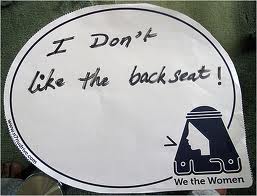
Why Saudi Arabia can’t ban women from driving forever

There’s something extraordinary happening in Saudi Arabia right now. I should know — you see, I was born there, lived there half my life, speak the language and understand the customs. Lately, I’m both amazed at and humbled by what I’m seeing: Extremely brave Saudi women, more driven than ever to change their society, despite the sad fact that they still aren’t allowed to drive.

And while it’s true there’s no formal law that bans females from getting behind the wheel in the ultra-conservative kingdom, it is also by no means a stretch to say they are, indeed, prohibited from doing so. Unfortunately, that’s just the way it’s always been in a society where religious edicts are often interpreted to mean it is illegal for women to drive.

I’ve reported on this subject for years and must admit, it’s a personal one for me. Some of my earliest memories entail trying to figure out why my American mother would always drive me around Oklahoma City, where we spent our summers, but could never take me around Jeddah, where we lived the rest of the year.

Read more at Ya Libnan

About Ya Libnan

Ya Libnan was originally created to capture the historic events that erupted as a result of the assassination of the former Prime Minister Rafic Hariri. The tragic Valentines Day murder gave birth to the Cedar Revolution.

In what started out as a personal log of events in Lebanon, we were pleasantly surprised by the overwhelming support for Ya Libnan. With our staff and a network of volunteers, we are proud of what we’ve accomplished. Ya Libnan offers our worldwide audience the latest independent news coverage which focuses exclusively on Lebanon.

Read more about Ya Libnan

Saudis Shock U.N., Quit Security Council Over Syria

Saudi Arabia took the extraordinary step Friday of refusing to take its seat on the U.N. Security Council — despite pursuing the position for years. It’s an unprecedented protest over the council’s failure to take firmer action in Syria and Palestine. And it comes at a time of growing Saudi frustration with American-led policies across the Middle East.

The decision, which came in an announcement from the Saudi Foreign Ministry, came one day after Saudi Arabia was elected for the first time in its history to the United Nations’ most powerful body. And it reflected deep resentment over China and Russia’s blockage of steps by the Security Council to restrain President Bashar al-Assad’s military and to force him from power. The announcement left many regional specialists shaking their heads, saying the move may run counter to Saudi interests and would deny the Saudis an opportunity to use the high-profile position on the council to promote a tougher line on Syria and other issues.

Read more at Foreign Policy

First Evidence Found of a Comet Strike on Earth

Comets haven’t been observed entering Earth’s atmosphere (shown here: Hale-Bopp in 1997).

Saharan glass and a brooch belonging to King Tut provide the first evidence of a comet directly impacting Earth, a new study claims. The finding may help unlock some of the mysteries surrounding the birth of our solar system.

A brooch owned by Tutankhamun. Photograph courtesy Jon Bodsworth via University of the Witwatersrand

About 28 million years ago a comet exploded over Egypt, creating a 3600°F (2000°C) blast wave that spread out over the desert below. The fiery shockwave melted the sand, forming copious amounts of yellow silica glass scattered over 2,300 square miles (6,000 square kilometers) of the Sahara.

Polished into the shape of a scarab beetle, a large piece of this glass found its way into a brooch owned by the famed Egyptian boy king Tutankhamen.

“Because there is no sign of an impact crater, it has been a mystery as to what kind of celestial event actually could have caused this debris field, but a small, black stone found lying in the middle of the glass area caught our attention,” said study co-author David Block, an astronomer at Wits University in Johannesburg, South Africa.

Saharan Surprise

A tiny slice of the black pebble was put through isotopic analysis, which definitely ruled out that it came from a meteor. Instead, the analysis showed that the pebble possessed the unique chemical signature of a comet, measured in terms of elements such as argon and carbon.

“It was then basically a matter of running the movie backwards in time and predicting what temperatures were needed to create the conditions we find that make up the fragment today,” Block says. “So when I saw the result of the analyses, I was completely ecstatic to realize that such a piece of cosmic history has been found for the first time right on our doorstep.”

Read more at National Geographic