With global influence, Turkey matters

The Committee to Protect Journalists promotes press freedom worldwide by defending the rights of journalists to report the news without fear of reprisal. Founded in 1981, CPJ takes action when journalists are censored, jailed, kidnapped, or killed for their work, without regard to political ideology. In its defense of journalists, CPJ protects the rights of all people to access independent sources of information – an essential part of a free society.

Turkey is hardly a press freedom paradise, but what makes the country so exciting for journalists is the amount of news it generates on any given day. The domestic story is huge, with near-daily street protests, the booming economy beginning to sag, and the prospect of regional conflict looming with Syria. And Istanbul is a base for the international press covering not only Turkey but also Syria, Iraq and Egypt.

All of this means that it is not hard to get a crowd of journalists together in Istanbul, especially if you’re buying the drinks. The talk inevitably turns to not only of what is being reported but what is not.

CPJ’s classification of Turkey as the world’s leading jailer of journalists was last year’s headline. The use of broad anti-terror laws to criminalize critical expression has long been a key component of the Turkish government strategy to suppress the Kurdish media as well as leftist and nationalist groups that it alleges are trying to topple the government.

The situation today is actually worse than it was when CPJ’s comprehensive press freedom report was issued in October 2012. In June, when street clashes over the destruction of Gezi Park morphed into broader demonstrations, journalists covering the protests became frequent targets of police abuse. During CPJ’s visit to Turkey last week, I met with one journalist, Hüseyin Gökhan Biçici, of the broadcaster IMC, who described how police detained him, ripped off his gas mask, and repeatedly beat him with clubs, focusing on his genitals.

But most mainstream journalists don’t fear being beaten or jailed. Instead, they fear losing their jobs.

The primary means of media control and manipulation involves indirect methods, such as pressure on media owners whose complex business interests depend on government support. There are widespread reports of phone calls from government advisers resulting in a particular journalist being fired or hired. The Turkish Union of Journalists reports that dozens of journalists have lost their jobs.

Read more at The Huffington Post

Under siege: the uncertain fate of Arab Christians – Al Arabiya

Hisham Melhem

Rarely do I write about my personal feelings and passions. The situation is different this time. I write with pain, nay, I write with anger. While watching with horror the savage assaults against the Christians in the Eastern Mediterranean, one of the first and oldest Christian communities in the world, I am shocked. From the beginning of the season of Arab uprisings I kept reminding myself, and others, that when we analyze and assess the rapidly unfolding events we should not lose sight of the fundamentals: the civil and human rights of all the peoples living in theses societies regardless of their ethnic and religious backgrounds or their gender. By that I meant that we should denounce and resist repression and injustice inherent in transitional times when the old entrenched powers, along with absolutist radical groups, continue to undermine peaceful inclusive change. Both state and “revolutionary” repression and intimidation should be confronted, although state repression is more dangerous because it is systemic and institutional.

Events in Syria

I was shocked by, and denounced, the destruction of the great Umayyad Mosque in Aleppo, a jewel of a structure with its elegant 11th century minaret. This was a beastly act perpetrated by a cruel regime and primitive gangs of fanatic Islamists. Also shocking was the shelling and looting of the historic Jobar synagogue in Damascus, one of the oldest Jewish houses of worship in the world. Now, I am seized with deep anger because the terror of both the Syrian government forces and elements of the radical Islamists Jabhat al-Nusra or Nusra Front have visited the iconic town of Maaloula, a truly unique and special Christian sanctuary nestled in the rugged mountains not far from Damascus where many inhabitants still speak Aramaic, the language of Christ . Maaloula’s Christian inhabitants, with their family tree going back to the first Christian communities in ancient Syria, fled the town when it was taken and retaken by the marauding gangs of Assad and al-Nusra.

I was born, and grew up, in Beirut in a decidedly conservative Christian (Maronite/Catholic) environment. I still remember the pride we felt as youngsters when we used to pray and chant Syriac/Aramaic hymns written in Arabic script. In my teens I read Nahj al-Balaghah by Imam ‘Ali ibn Abi Talib (usually translated in English as “Peak of eloquence”) the cousin and son-in-law of Prophet Muhammad, who is considered by his Shiite followers as the most important figure in Islam after the Prophet. The book is truly a magnificent collection of speeches, invocations and aphorisms written by a man of wisdom, courage and compassion. This was the beginning of my love affair with the Arabic language. Another great Muslim Caliph I admired was Omar Ibn Al Khattab, the second of the four wise Caliphs that succeeded Prophet Muhammad. Omar, one of the most powerful and consequential figures in the history of Islam, was known for his strong sense of social justice. I named my son after him.

Even when I parted ways with religion and became a secularist, I remained attached to the rituals and aestheticism of Christianity and Islam and their civilizational legacies. When I find myself in a European capital I do my own version of (Gothic) church hopping. On my first visit to Cairo and Istanbul I was intoxicated with their charming mosques and ancient churches. All this is to say that what I am writing here is not emanating from my religious background but from my moral and political convictions.

Read more at Al Arabiya

The Islamic State of Iraq and the Levant Group are not in Line with the Syrian Revolution


Syrian Coalition
Istanbul, Turkey
September 20, 2013

The Syrian Coalition condemns the Islamic State of Iraq and the Levant (ISIS) for its aggression towards Syrian revolutionary forces and its indifference to the lives of the Syrian people. The Syrian Coalition stresses that the following ISIS practices constitute a stark contradiction to the principles of the Syrian revolution:

1. ISIS’s link with a foreign agenda and its repeated calls to establish a new state inside Syria violating national sovereignty.

2. ISIS’s repeated repressive practices with respect to the freedoms of citizens, doctors, journalists, and political activists.

3. ISIS’s use of force in dealing with civilians, as well as its fight against the Free Syrian Army (FSA), in particular the recent incident in the town of Azaz, Rural Aleppo, where ISIS tried to control the Bab al-Salamah border crossing with Turkey on September 18, 2013.

4. ISIS no longer fights the Assad regime. Rather, it is strengthening its positions in liberated areas, at the expense of the safety of civilians. ISIS is inflicting on the people the same suppression of the Baath party and the Assad regime.

The Syrian Coalition reiterates that the Syrian people are moderate, and respect religious diversity and political differences. They reject extremist (takfiri) ideology and exclusionary behavior, including any and all criminal acts against all citizens.

The Syrian Coalition emphasizes that the principles and values of the Syrian revolution are universal human values, and calls on all revolutionary forces to continue the struggle towards a state where freedom, justice, rule of law, democracy, and equality can thrive.

We ask for Mercy for our martyrs, health for our wounded, and freedom for our detainees.

Long live Syria and its people, free and with honor.

via Syrian National Coalition

‘We Just Wish for the Hit to Put an End to the Massacres’

For Syrian refugees in Jordan’s Zaatari camp, arguments about international law ring hollow.

A family from Dara’a, now living in a caravan in Zaatari. “Even the children have forgotten how to smile,” the woman remarked to me. (All photos: Max Blumenthal)

I sat inside a dimly lit, ramshackle trailer functioning as a general store for the residents of the Zaatari refugee camp in Jordan, while a wiry, sad-eyed man named Adbel told me about the massacres that drove him from his hometown. Dragging deeply on a cigarette, Abdel described how army forces rained shells down on his neighborhood in Deir Ba’alba, a district in Homs, over five months ago, pounding the town over and over. Then he told me how government thugs barged into homes at 6 am, methodically slashing his neighbors to death with long knives, leaving fields irrigated with the blood of corpses, a nightmarish scene that looked much like this. Like nearly everyone I interviewed in the camp, he described his experience in clinical detail, with a flat tone and a blank expression, masking continuous trauma behind stoicism.

As Abdel mashed his cigarette into a tin ashtray and reached to light another, a woman appeared at the shop window with three young children. She said she had no money and had not been able to purchase baby formula for three days. She had trudged to hospitals across the camp seeking help and was turned away at each stop. Without hesitation, the shop owner, a burly middle-aged man also from Homs, pulled a can of formula off a shelf and handed it over to the woman. She made no promise to pay him back, and he did not ask for one. Like so many in the camp, she left Syria with nothing and now depends on the charity of others for her survival. In a human warehouse of 120,000, the fourth-largest population center in Jordan and the second-largest refugee camp in the world, where few can leave and even fewer are able to enter, the woman’s desperate existence was not an exception but the rule.

“We’re in a prison right now,” Abdel told me. “We can’t do anything. And the minute we try to have a small demonstration, even peacefully, [Jordanian soldiers] throw tear gas at us.”

“Guantánamo!” the shop owner bellows.

None of the dozens of adults I interviewed in the camp would allow me to report their full names or photograph their faces. If they return to Syria with the regime of President Bashar al-Assad still intact, they fear brutal recriminations. Many have already survived torture, escaped from prisons or defected from Assad’s army. “With all the bloodshed, the killing of people who did not even join the resistance, Bashar only wanted to teach us one lesson: That we are completely weak and he is our god,” a woman from Dara’a in her early 60s told me. “His goal is to demolish our spirit so we will never rise up again.” The woman’s sons had spent four months under sustained torture for defecting to the Free Syrian Army. She does not know where they are now, only that they are back in the field, battling Assad’s forces in a grinding stalemate that has taken somewhere around 100,000 lives.

Mansour, a 7-year-old, was held at gunpoint by regime forces when his father was arrested. They were reunited in Zaatari, where Mansour is desperate to receive a caravan for his family.

When news of the August 21 chemical attacks that left hundreds dead in the Ghouta region east of Damascus reached Zaatari, terror and dread spiked to unprecedented levels. Many residents repeated to me the rumors spreading through the camp that Bashar would douse them in sarin gas as soon as he crushed the last vestiges of internal resistance—a kind of genocidal victory celebration. When President Barack Obama announced his intention to launch punitive missile strikes on Syria, however, a momentary sense of hope began to surge through the camp. Indeed, there was not one person I spoke to in Zaatari who did not demand US military intervention at the earliest possible moment.

Read more at The Nation

What You Need to Know About the Syrian War

Syria is much like Egypt. While it is a Muslim-dominated country with a rich Islamic history, it has also had a secular, authoritarian government for decades. And like Egypt, Syria is a country of considerable ethnic and religious diversity, a country with a high literacy rate, a large educated class, and a reasonably good educational system. The point here is that there is no more popular support for the creation of an Islamic state in Syria than there is in Egypt. The Arab world is very much divided in its vision of the desired outcome of the Arab Spring.

The Syrian opposition Free Syrian Army is headed by defected leaders of Assad’s military establishment, and the majority of its fighters are defected Syrian military soldiers and citizen militia, and they number about 200,000 fighters. Of these, roughly 10,000 are Syrian Islamist fighters. There are also about 2,000 foreign jihadist fighters from around the world, who have come to Syria to fight because of their deep Islamic religious fundamentalist beliefs. These are estimates were provided by FSA Colonel Abdul Jabbar al-Oqaidi.

The Syrian people are desperate. As former U.S. Secretary of State Madeleine Albright remarked recently on the television program Face the Nation, it is hard to imagine how things in Syria could become worse as a result of an American military strike. The Syrian civil war has caused the most dire humanitarian crisis on the planet. Over a 100,000 people have died, every manner of war crime has been committed by the regime against its own people, and over two million Syrians are now refugees, many being without the most basic means of survival. The likelihood that a targeted U.S. strike against military assets of the Assad regime could actually make things worse for the Syrian people is an argument that simply does not stand up to critical scrutiny. How could things be worse?

The Syrian opposition has been accepting support from any and all sources. The majority of the opposition fighters have made it quite plain that they are not particularly fond of the presence of foreign fighters in their country, but anyone who opposes Assad is a nominal ally.

I believe that it is true and fair to say, and I say this as an Obama partisan, that the Obama administration missed an opportunity to be the principal ally of the Syrian opposition, and thus deferred this role to the jihadists. On the other hand, American involvement taints the noblest of motivations in the eyes of the Arab world. It is a foreign policy no-win scenario for the Obama administration. Thank you, George Bush.

Here, from the archives, is the essence of the political philosophy of the Syrian opposition movement, as published in late February of this year by the conference of the Syrian National Coalition, in Cairo, Egypt:

The Syrian Coalition’s Closing Statements of the General Assembly — Cairo, Egypt

The Syrian Coalition’s Closing Statements of the General Assembly Meeting Outline the Framework of a Political Solution and Announce a Date for the Selection of a Prime Minister for the Interim Government

In its meeting on February 21-22, 2013, in Cairo, Egypt, The Syrian Coalition defined the framework of a political initiative that is inline with advancements on the ground, while at the same time ensures achieving the goals of the revolution, the preservation of human life, stability, infrastructure and institutions. Such a political solution must be founded within the following fundamental parameters:

1. Achieving the goals of the Syrian revolution, which include: justice, freedom, liberty, and dignity, while preserving human life, and sparing the country further destruction, devastation and dangers. Furthermore, it is important to preserve the unity and sovereignty of Syria, geographically, politically, and socially, as the ultimate goal is to achieve a civil, democratic and pluralistic Syria, where all citizens are equal regardless of gender, religion, or ethnicity.

2. The removal of Bashar Al-Assad and all of the security and military leadership responsible for the decisions that have destroyed the country and terrorized its people. These individuals do not fall within the confines of any political framework and will not be a part of this political solution. They must be held accountable for their crimes.

3. The political solution and the future of our country encompasses all Syrians, including honorable persons from within the current security forces, the Baathist regime and any other government, civil or political organization, so long as these individuals were not involved in crimes against the Syrian people.

4. All initiative must be defined by the above parameters, set within a specific time frame, and must include a clear and announced goal.

5. International guarantees from the Security Council, and especially from Russia and the United States, as well as international support and safeguards are important for the realization of any initiatives through a binding UN Security Council resolution.

6. A commitment to continue supporting the revolution on the ground to tip the scale of power in support of the revolution.

7. Obtaining the necessary support from the friends of Syria and its neighbors within the region is also vital for a successful political solution within the above parameters.

8. The General Assembly of the Coalition is the only body authorized to propose a political initiative on behalf of the Syrian Coalition.

The Syrian Coalition’s General Assembly has decided to form an interim government for Syria that will carry out its duties from within the Syrian territories. The Coalition set a date of March 2nd, 2013 to select a prime minister from amongst the candidates nominated by the General Assembly, within the agreed upon parameters and after consultation with Syrian opposition forces and the revolutionary movement.

The General Assembly of the Syrian Coalition condemns the barbaric bombing and assault, which once again targeted several civilian neighborhoods in Aleppo. These attacks were carried out using Russian made ballistic missiles and caused severe damage and loss of life.

These bombings and attacks on densely populated neighborhoods with missiles launched from a distance of over 400 km away are a crime against humanity. The head of this criminal regime, those who carry out these attacks and those who supply this regime with weapons of mass destruction bear the full moral and political responsibility of these crimes. Furthermore, those who deprive the Syrian people from a fair and equal defense by failing to provide them with the necessary weapons to do so also bear the moral and political responsibility of these vicious attacks.

via البيان الختامي لاجتماع الهيئة العامة / The Syrian Coalition’s Closing Statements.

Videos of Syrian Chemical Attack Victims – United States Senate Select Committee on Intelligence

Attached are 13 videos compiled by the Intelligence Community (IC) from videos taken in Damascus, Syria following the use of chemical weapons on August 21, 2013.

via United States Senate

Human Rights Watch: Assad Regime Responsible for Chemical Weapons Attacks


Syrian Coalition
Istanbul, Turkey
September 11, 2013

“Based on the available evidence, Human Rights Watch finds that Syrian government forces were almost certainly responsible for the August 21 attacks, and that a weapons-grade nerve agent was delivered during the attack,” a Human Rights Watch report concluded.

The report mentions a body of evidence implicating the Assad regime in the chemical weapons attacks on western and eastern Gouta on the early hours of August 21st, 2013.

Human Rights Watch said they have investigated claims that FSA fighters have used those weapons but found such claims “lacking in credibility and inconsistent with the evidence found at the scene.”

This report undeniably indicates that the Assad regime is responsible for the use of internationally prohibited chemical weapons in civilian areas.

The Syrian Coalition reaffirms its call for an international proportionate response to war crimes. It stresses that crimes against humanity cannot be absolved through political concessions.

A political solution is not viable in light of the absence of a firm international response that would restrain Assad’s killing machine and ensure the Syrian people’s aspirations for freedom, justice, and dignity are achieved

via Syrian National Coalition

The West Must Not Appease Bashar al-Assad

No reasonable person, neither American nor Syrian, wishes to see the United States and its allies become deeply involved in the Syrian civil war, but for the western powers to fail to act now is tantamount to appeasement of a butcher of children. No one knows what will happen if we strike Syrian military targets; no one knows what will happen if we do not. That is not an argument. If the past is prologue, then Assad will continue to slaughter the people of Syria without discrimination. That much appears certain.

The confiscation of Assad’s chemical weapons arsenal does not look like a realistic proposal on its face, because the safe transfer of massive quantities of chemical weapons in a war zone would be risky and problematic at best. How will compliance be verified when it was difficult just for UN inspectors to reach a suburb of Damascus?

The French are correct to insist upon stringent preconditions before any negotiated deal with Assad on chemical weapons. The world has tolerated this monster long enough. Every person who detests war should take a hard look at the situation in the Middle East today, and then explain to themselves how a victory for Assad, Iran and Hezbollah reduces the probability of a Middle East war, one into which the United States would be inextricably drawn by its many alliances in the region. To those who believe that opposing military action against Syria is the path of peace, I respectfully ask that they think again of the likely consequences of doing nothing.

There are indeed shades of past conflicts evoked by the images of carnage in Syria. But the deja vu being experienced is not that of Iraq–which was completely different–but of another, similar atrocity that occurred at Guernica, Spain, in 1937, of another moral failure to respond, and of the results of a flawed strategy of trying to appease a monster.

On April 26,1937, bombers and fighters of the German Luftwaffe and the Italian air force attacked the small Basque village of Guernica in northern Spain. It was an outrageous assault on an unarmed civilian population. It was the blatant mass murder of hundreds of civilians, by some accounts over a thousand were killed, men, women and children.

For America in those days, neutrality was the dominant U.S. foreign policy model, enshrined in a series of congressional acts that had been designed to further and further remove the United States from the possibility of involvement in “foreign wars.” The prevailing American sentiment then, as today in regard to atrocities being committed in Syria, was that what had happened in Guernica was not our problem. It simply didn’t involve us.

Four years later, the relevance of Guernica to the security interests of the United States became more than apparent. On December 8, 1941, in the wake of a devastating attack on American naval forces at Pearl Harbor, the United States formerly declared war on imperial Japan. Three days later, war was declared on the United States by those same German and Italian fascist regimes who had bombed Guernica only four years earlier.

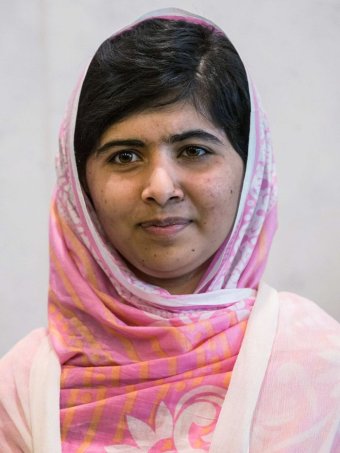
Shot Pakistani teen Malala Yousafzai vows to fight for womens education after accepting award – ABC News Australian Broadcasting Corporation

Shot Pakistani teen Malala Yousafzai vows to fight for womens education after accepting award - ABC News Australian Broadcasting Corporation

Pakistani teen Malala Yousafzai, shot in the head last year by the Taliban for campaigning for girls education, vowed overnight to intensify her struggle for “a world where everyone can go to school”.

Speaking at a ceremony in The Hague, where she was awarded the 2013 International Children’s Peace Prize, Malala said last October’s attack on her had made her more determined than ever to continue her campaign.

“I was just one target for their violence,” Malala said in her acceptance speech, referring to her near-fatal shooting when a Taliban gunman’s bullet grazed her brain.

“There are many others for whom we must continue… so that children all over the world can have a right to go to school.”

Malala, 16, received her prize from the 2011 Nobel Peace laureate, Yemeni journalist and activist Tawakkol Karman, who told a humbled Malala “you are my hero”.

Read more at the Australian Broadcasting Corporation

Read more about recent Taliban Crimes against women here and here.

Exclusive: Intercepted Calls Prove Syrian Army Used Nerve Gas, U.S. Spies Say


Bodies of people activists say were killed by nerve gas in the Ghouta region are seen in the Duma neighbourhood of Damascus


Last Wednesday, in the hours after a horrific chemical attack east of Damascus, an official at the Syrian Ministry of Defense exchanged panicked phone calls with a leader of a chemical weapons unit, demanding answers for a nerve agent strike that killed more than 1,000 people. Those conversations were overheard by U.S. intelligence services, The Cable has learned. And that is the major reason why American officials now say they’re certain that the attacks were the work of the Bashar al-Assad regime — and why the U.S. military is likely to attack that regime in a matter of days.

But the intercept raises questions about culpability for the chemical massacre, even as it answers others: Was the attack on Aug. 21 the work of a Syrian officer overstepping his bounds? Or was the strike explicitly directed by senior members of the Assad regime? “It’s unclear where control lies,” one U.S. intelligence official told The Cable. “Is there just some sort of general blessing to use these things? Or are there explicit orders for each attack?”

American intelligence analysts are certain that chemical weapons were used on Aug. 21 — the captured phone calls, combined with local doctors’ accounts and video documentation of the tragedy — are considered proof positive. That is why the U.S. government, from the president on down, has been unequivocal in its declarations that the Syrian military gassed thousands of civilians in the East Ghouta region.

Read more at Foreign Policy