Where Does Facebook Stop and the NSA Begin?

Illustration: Dale Stephanos

“That social norm is just something that has evolved over time” is how Mark Zuckerberg justified hijacking your privacy in 2010, after Facebook imperiously reset everyone’s default settings to “public.” “People have really gotten comfortable sharing more information and different kinds.” Riiight. Little did we know that by that time, Facebook (along with Google, Microsoft, etc.) was already collaborating with the National Security Agency’s PRISM program that swept up personal data on vast numbers of internet users.

In light of what we know now, Zuckerberg’s high-hat act has a bit of a creepy feel, like that guy who told you he was a documentary photographer, but turned out to be a Peeping Tom. But perhaps we shouldn’t be surprised: At the core of Facebook’s business model is the notion that our personal information is not, well, ours. And much like the NSA, no matter how often it’s told to stop using data in ways we didn’t authorize, it just won’t quit. Not long after Zuckerberg’s “evolving norm” dodge, Facebook had to promise the feds it would stop doing things like putting your picture in ads targeted at your “friends”; that promise lasted only until this past summer, when it suddenly “clarified” its right to do with your (and your kids’) photos whatever it sees fit. And just this week, Facebook analytics chief Ken Rudin told the Wall Street Journal that the company is experimenting with new ways to suck up your data, such as “how long a user’s cursor hovers over a certain part of its website, or whether a user’s newsfeed is visible at a given moment on the screen of his or her mobile phone.”

There will be a lot of talk in coming months about the government surveillance golem assembled in the shadows of the internet. Good. But what about the pervasive claim the private sector has staked to our digital lives, from where we (and our phones) spend the night to how often we text our spouse or swipe our Visa at the liquor store? It’s not a stretch to say that there’s a corporate spy operation equal to the NSA—indeed, sometimes it’s hard to tell the difference.

Read more at Mother Jones

A Muzzled Chinese Artwork, Absent but Speaking Volumes

The Chinese sculptor Wang Keping at the Ullens Center for Contemporary Art in Beijing.

BEIJING — A wood sculpture of a larger-than-life man’s head whose gaping mouth is stuffed with a plug — a piece of Chinese protest art from more than 30 years ago — was supposed to be a star attraction at a retrospective here.

The startling visage, called “Silence,” born as a cri de coeur against the censorship of the period after the Cultural Revolution in China, was shown briefly during an artistic spring in Beijing in 1979 and 1980, before being banished.

A work called “Silence” was supposed to be a star attraction, but the center did not submit it to the authorities for review, believing it would be rejected.

Even today, says the creator of the work, Wang Keping, who lives in exile in France, his signature sculpture is too hot. “Silence” is notably absent from the exhibition of his works from his years abroad at the Ullens Center for Contemporary Art in the fashionable 798 Art Zone in Beijing.

“If it were part of the exhibit, there would be no exhibit,” Mr. Wang said as he showed a visitor dozens of dark-wood abstract sculptures, some of them hinting at the bodies of men and women, made in his studio outside Paris.

These newer pieces, including two towering black sculptures that in style and shape faintly recall the heads on Easter Island, proved acceptable to the Beijing Municipal Bureau of Culture. The bureau must see in advance the number and subject of artworks imported for exhibits.

The Chinese authorities were in fact never given a chance to judge “Silence” anew.

Read more at The New York Times

Cut Off: Starving Syrians Hope to Live Through Winter

A young boy sits alone in a rubble-filled street in the Harasta area of Damascus. What the chemical weapons failed to achieve is now being gradually accomplished by hunger: the annihilation of a city.

As the world focuses on Syria’s chemical disarmament, thousands of people in the country face a more pressing concern: starvation. Cut off by ongoing violence, they are dying because they have no access to supplies. Many will not survive the winter.

Three-year-old Ibrahim Khalil survived the chemical weapons attacks on Aug. 21. But then, 10 days later, he died of hunger — just as the next child died hours after him and a third died four days later in the Damascus suburb of Muadhamiya.

When the world learned of the sarin gas attacks that took place in the suburbs of Damascus this past summer, it reacted with outrage, leading to Syria’s dismantling of its chemical arsenal, which was declared complete by the Organization for the Prohibition of Chemical Weapons on Thursday. Yet hardly anyone seems to be taking notice of these new deaths. After being under siege for months, cut off from food supplies, electricity, water and any form of aid, people are beginning to die of malnutrition.

Children are also starving to death in Yarmouk in the southern part of Damascus and other places sealed off by government troops. But nowhere is the situation as fatal as it is in Muadhamiya, where six children had died by mid-October “and dozens are already so weak that an ordinary cold would kill them,” says Dr. Amin Abu Ammar, one of the last doctors in the suburb.

The fact that President Bashar Assad agreed to destroy his stockpiles of chemical weapons is a piece of good news from a war that is not producing any other positive reports. In fact, it’s too good, so good that the chemical weapons inspectors were promptly awarded the Nobel Peace Prize, and it seemed as if the rest of the war had ceased. And while European governments are mainly concerned about foreign jihadists infiltrating Syria, there are about 1,000 armed local fighters in Muadhamiya who don’t even have any contact with neighboring towns.

Read more at Der Spiegel

Are All Those Insurance Company Cancellation Letters Too Good to Check?

Paul Waldman recounts yet another story of someone allegedly getting screwed by Obamacare. This time the victim is Deborah Cavallaro, profiled yesterday on the NBC Nightly News:

We learn in this story that her insurer is cancelling her current plan, which costs $293 a month, because it doesn’t comply with the new law. They’ve offered her a new plan at $484 a month. That sounds like it sucks!….But wait. Maybe she’s not a victim after all. How does the $484 plan her current insurer is offering compare to the other ones she could get? Did she or the reporter go to the California exchange and try to figure that out? Apparently, they didn’t. But I did.

It took less than 60 seconds. Let’s assume that Deborah has a high enough income that she isn’t eligible for subsidies. I put in that I was 45 years old and got nine different choices for a Bronze plan, which in all likelihood most closely resembles what Deborah has now. The average monthly cost was $258, or $35 a month less than what Deborah’s paying now for her bare-bones plan….She can get a Silver plan, with more generous coverage, for $316, only $23 more than she’s paying now. Congratulations, Deborah!

In a follow-up post, Waldman makes the right point about this:

I want to talk about the thing that spawns some of these phony Obamacare victim stories: the letters that insurers are sending to people in the individual market….There’s something fishy going on here, not just from the reporters, but from the insurance companies. It’s time somebody did a detailed investigation of these letters to find out just what they’re telling their customers.

Read more at Mother Jones

Wolf protection plan raises hackles in Southwest

The U.S. wants to ban most killing of wild Mexican wolves in New Mexico and Arizona, and expand the area where the animals can roam. But many see federal overreach.

The U.S. Fish and Wildlife Service proposes to extend Endangered Species Act protections for an estimated 75 Mexican wolves in the wild in New Mexico and Arizona. (U.S. Fish and Wildlife Service / January 25, 1998)

ALBUQUERQUE — In the small, rural community of Reserve, children waiting for the school bus gather inside wooden and mesh cages provided as protection from wolves. Parents consider the “kid cages” a reasonable precaution.

Defenders of the wolves note there have been no documented wolf attacks in New Mexico or Arizona. Fears of wolves attacking humans, they say, are overblown, and the cages nothing more than a stunt.

In 1995, the reintroduction of Canadian gray wolves into the northern Rockies ignited a furor.

In 1995, the reintroduction of Canadian gray wolves into the northern Rockies ignited a furor.

Such protections would make it illegal to kill wolves in most instances. The new federal plan would also significantly expand the area where the wolves could roam unmolested.

To many conservatives in the West, such protections are examples of government overreach — idealistic efforts by officials who don’t know what it’s like to live with wolves.

Read more at the Los Angeles Times

Lou Reed dead at 71: New York City rock pioneer, The Velvet Underground musician died Sunday

The Brooklyn-born guitarist passed away Sunday

Lou Reed passed away on Sunday, according to the Rolling Stone.

Lou Reed, the founder of the seminal avant-garde band The Velvet Underground who influenced a generation of rock stars, died Sunday at 71.

No official cause of death was announced, but the hard-living icon underwent a liver transplant in May.

Reed is best known for 1973 hit ‘Walk on the Wild Side,’ but his body of work over a nearly 50-year career often defied categorization.
The Brooklyn-born Reed grew up in Freeport, but New York was the canvass on which he painted much of his music. His 1989 album “New York” was one of the most admired of his career, looking back on the turbulent ’80s through a lens of wry humor and measured anger that called out the likes of Rudy Giuliani, the NRA, subway shooter Bernhard Goetz and the decades Republican presidents.

Reed was one of the few artists who meant it when he said he was unconcerned with the commercial appeal of his music.

Read more at the New York Daily News

Addicted to the Apocalypse

Once upon a time, walking around shouting “The end is nigh” got you labeled a kook, someone not to be taken seriously. These days, however, all the best people go around warning of looming disaster. In fact, you more or less have to subscribe to fantasies of fiscal apocalypse to be considered respectable.

Paul Krugman

And I do mean fantasies. Washington has spent the past three-plus years in terror of a debt crisis that keeps not happening, and, in fact, can’t happen to a country like the United States, which has its own currency and borrows in that currency. Yet the scaremongers can’t bring themselves to let go.

Consider, for example, Stanley Druckenmiller, the billionaire investor, who has lately made a splash with warnings about the burden of our entitlement programs. (Gee, why hasn’t anyone else thought of making that point?) He could talk about the problems we may face a decade or two down the road. But, no. He seems to feel that he must warn about the looming threat of a financial crisis worse than 2008.

Or consider the deficit-scold organization Fix the Debt, led by the omnipresent Alan Simpson and Erskine Bowles. It was, I suppose, predictable that Fix the Debt would respond to the latest budget deal with a press release trying to shift the focus to its favorite subject. But the organization wasn’t content with declaring that America’s long-run budget issues remain unresolved, which is true. It had to warn that “continuing to delay confronting our debt is letting a fire burn that could get out of control at any moment.”

As I’ve already suggested, there are two remarkable things about this kind of doomsaying. One is that the doomsayers haven’t rethought their premises despite being wrong again and again — perhaps because the news media continue to treat them with immense respect. The other is that as far as I can tell nobody, and I mean nobody, in the looming-apocalypse camp has tried to explain exactly how the predicted disaster would actually work.

Why Saudi Arabia can’t ban women from driving forever

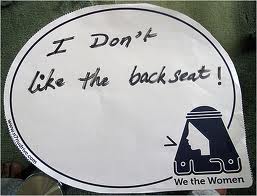
There’s something extraordinary happening in Saudi Arabia right now. I should know — you see, I was born there, lived there half my life, speak the language and understand the customs. Lately, I’m both amazed at and humbled by what I’m seeing: Extremely brave Saudi women, more driven than ever to change their society, despite the sad fact that they still aren’t allowed to drive.

And while it’s true there’s no formal law that bans females from getting behind the wheel in the ultra-conservative kingdom, it is also by no means a stretch to say they are, indeed, prohibited from doing so. Unfortunately, that’s just the way it’s always been in a society where religious edicts are often interpreted to mean it is illegal for women to drive.

I’ve reported on this subject for years and must admit, it’s a personal one for me. Some of my earliest memories entail trying to figure out why my American mother would always drive me around Oklahoma City, where we spent our summers, but could never take me around Jeddah, where we lived the rest of the year.

Read more at Ya Libnan

About Ya Libnan

Ya Libnan was originally created to capture the historic events that erupted as a result of the assassination of the former Prime Minister Rafic Hariri. The tragic Valentines Day murder gave birth to the Cedar Revolution.

In what started out as a personal log of events in Lebanon, we were pleasantly surprised by the overwhelming support for Ya Libnan. With our staff and a network of volunteers, we are proud of what we’ve accomplished. Ya Libnan offers our worldwide audience the latest independent news coverage which focuses exclusively on Lebanon.

Read more about Ya Libnan

Web Sites and Grave Sites

Charles M. Blow

Republicans are apoplectic about Healthcare.gov, the official Web site for the Affordable Care Act.

They are trying desperately to change the subject from their disastrous government shutdown by ranting about the failures of a government Web site that cost a tiny fraction of what was lost as a result of the shutdown.

Republicans are pretending that they care about the problems encountered in signing up for a system that many of them are bent on destroying.

They are demanding an immediate fix to something they want to break.

They are trying to deflect public outrage away from their record-low approval ratings.

The only problem for Republicans is that a technical issue isn’t likely to have legs. Yes, it’s embarrassing. Yes, it’s frustrating. Yes, it’s an unforced error.

But it’s also fixable, and in the grand scheme of things, a malfunctioning Web site is more understandable and less consequential than a malfunctioning political party.

The Web site will be fixed. Can the same be said of the party that has planted its flag on the outskirts of reason? Can the same be said of the party being hijacked by hyperpartisans?

Read more at The New York Times

Obamacare and part-time jobs: The myth exploded (again)

Over the last month the number of workers in part-time jobs for economic reasons–slack demand, cutbacks in hours–has remained stable. (Mark Lennihan/AP)

Tuesday’s tepid brew of jobs data, delayed more than two weeks by the government shutdown, wasn’t worth waiting for. It shows an increase in total nonfarm employment by 148,000 in September over August, which is consistent with economic growth crawling along in second gear.

The report’s most notable nugget is the change in part-time work. Over the last month the number of workers in part-time jobs for economic reasons–slack demand, cutbacks in hours–has remained stable. Over the last year, however, it has fallen by 681,000. Those part-timers also constitute a smaller share of all workers–5.5% in September compared to 6% a year earlier.

That puts the lie to the popular conservative meme that Obamacare has transformed America’s workforce into part-timers. The idea is that employers wishing to evade the law’s requirement that they offer health insurance to employees working more than 30 hours a week will cut their hours to 29 or less. The shorthand about this provided by Sen. Ted Cruz (R-Texas), that one-stop shop for Obamacare disinformation, was “single parents who have been forced into part-time work.”

Read more at the Los Angeles Times